COOPERATION MODEL
ARTIFICIAL INTELLIGENCE
PRODUCT ENGINEERING
DevOps & Cloud
LOW-CODE/NO-CODE DEVELOPMENT
INDUSTRY
FRONTEND DEVELOPMENT
CLOUD DEVELOPMENT
MOBILE APP DEVELOPMENT
LOW CODE/ NO CODE DEVELOPMENT
EMERGING TECHNOLOGIES



 4 mins read
 Last updated December 11, 2025
The conversation around Artificial Intelligence across different industries has now changed.
For leaders in 2025, the question is no longer if they should adopt AI, but how to implement it effectively and economically. As the global AI market is projected to surge from $371.71 billion in 2025 to $2.4 trillion by 2032, this technology has become the new infrastructure for competitive advantage.
For Chief Technology Officers, founders, and product owners, the primary challenge remains the same: the cost of AI development is complex and opaque. Estimates can range from $20,000 for a lean prototype to over $1 million for a custom, enterprise-scale platform.
This guide demystifies these costs. It provides a clear, actionable framework for budgeting, planning, and optimizing your AI investment to transform a significant expenditure into a strategic, high-return asset.
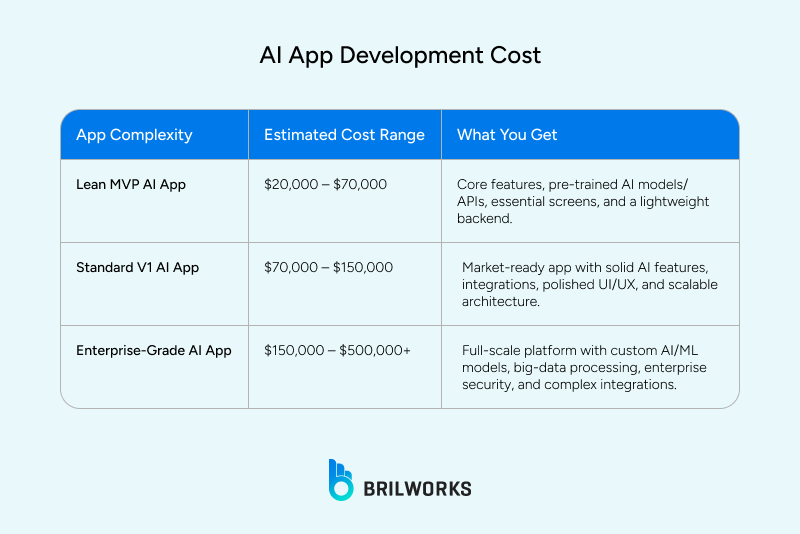
Wide Cost Spectrum: AI app development costs range from $20,000 to 70,000 for a lean MVP and can exceed 500,000 for enterprise-grade solutions.
Core Cost Drivers: The most significant factors influencing your budget are AI model complexity (custom vs. pre-trained) and data requirements (acquisition, cleaning, and labeling).
Strategic Optimization: The most effective way to manage costs is to adopt an MVP-first strategy, leverage open-source tools and cloud infrastructure, and select the right AI development partner.
Budget for the Long Term: Plan for ongoing maintenance and support, which typically costs 15-25% of the initial development budget annually, covering model retraining, hosting, and updates.
Global Talent Impacts Budget: Developer rates vary dramatically by region, from $30-60 per hour in Asia to $120-250 in North America. Balancing cost with expertise is critical.
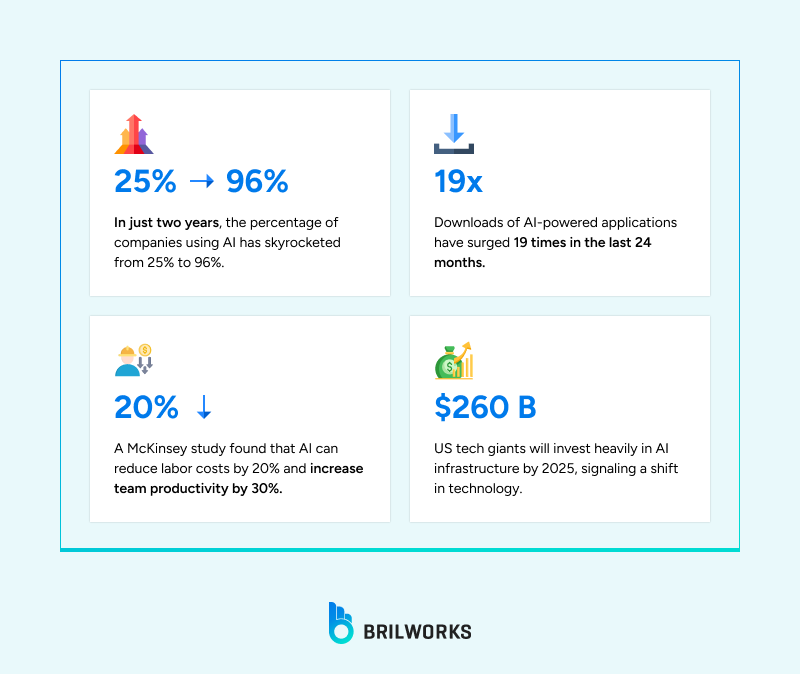
The market has passed its tipping point. The rapid saturation of AI across industries makes strategic investment a critical priority for maintaining market relevance and operational efficiency. The data speaks for itself:
To provide an immediate, high-level answer, we've synthesized industry data into three core pricing tiers based on project complexity. These ranges serve as a foundational guide for initial budget discussions.
The final cost of an AI application is not a single number but a dynamic sum of several key variables. Understanding these drivers is essential for accurate budgeting and resource allocation.
The cost of an AI application scales directly with the sophistication of its intelligence. Integrating pre-trained models via APIs (e.g., for sentiment analysis or language translation) is the most cost-effective approach.
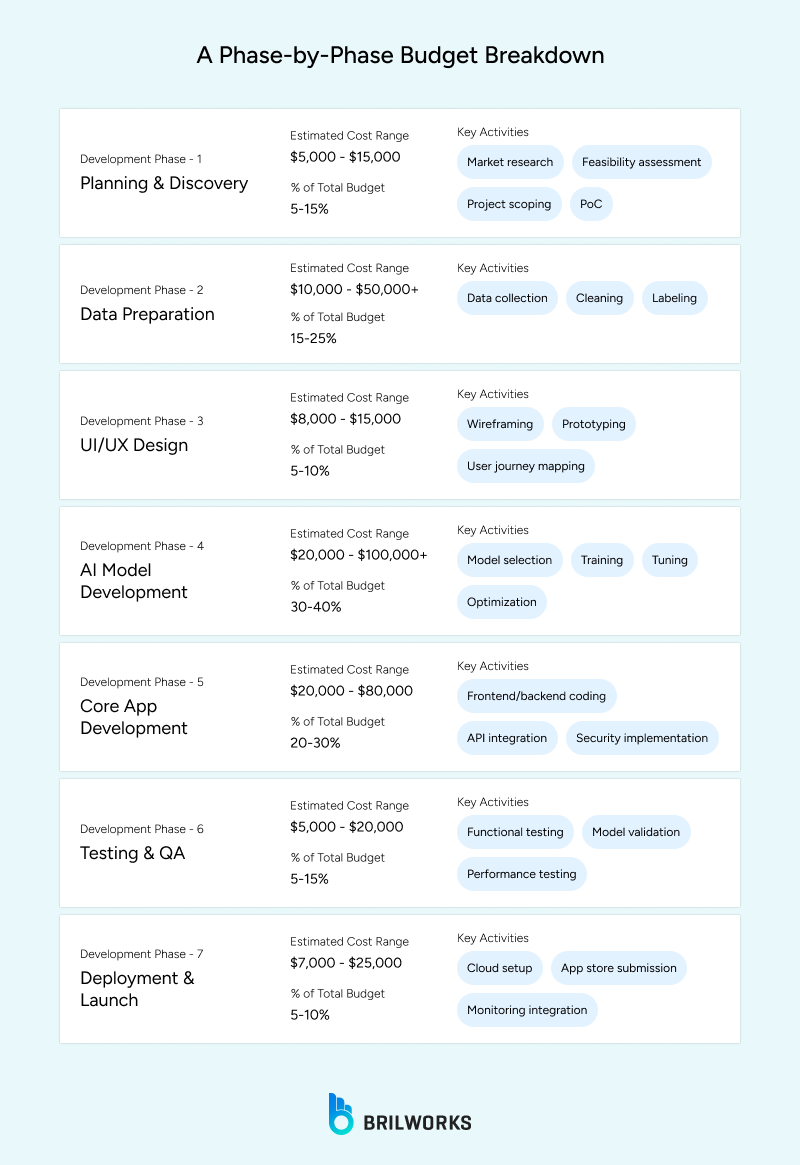
Conversely, developing custom deep learning or generative AI models from scratch is the most resource-intensive and expensive undertaking. A custom-built AI model can single-handedly account for 30-40% of the total project cost.
High-quality, well-structured data is the lifeblood of any effective AI system. The costs associated with acquiring, cleaning, labeling, and storing this data are significant and can consume 15-30% of the total project budget. Key data-related expenses include:
Data Gathering: $5,000 - $20,000 to collect raw data from various sources.
Data Labeling: $15,000 - $50,000 or more for manual annotation required for supervised learning models.
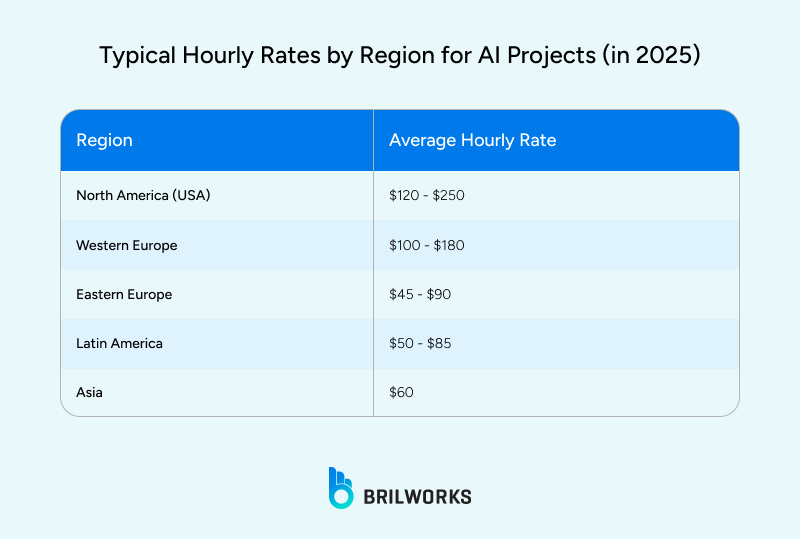
The choice of programming languages, frameworks (e.g., TensorFlow, PyTorch), and cloud platforms (AWS, Azure, GCP) directly impacts the budget. While many tools are open-source, ongoing cloud infrastructure costs are a major operational expense.
These costs, which cover model training, data processing, and hosting, can consume 20-30% of the budget, with mid-sized applications often spending $5,000 to $20,000 per month.
Integrating an AI application with legacy enterprise systems such as CRMs, ERPs, or proprietary databases adds significant complexity and cost. Developing secure APIs, ensuring data synchronization, and managing compatibility can range from $20,000 to $100,000, depending on the number and complexity of the systems involved.
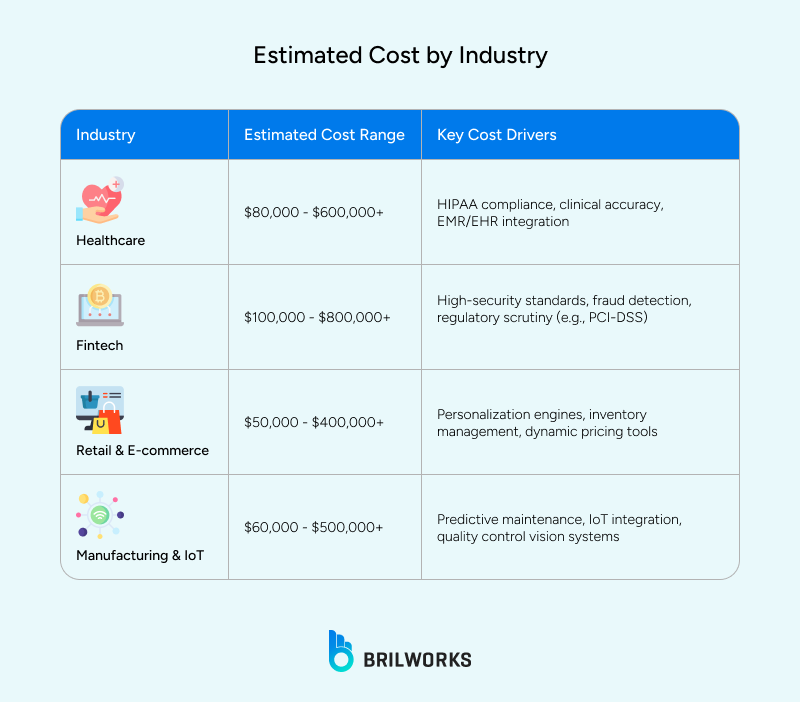
For industries like healthcare (HIPAA) and finance (PCI-DSS), meeting stringent security and compliance standards is non-negotiable and inflates development costs. Specific mandatory expenses include penetration testing (20,000–30,000) and annual compliance audits, which can cost anywhere from $50,000 to over $500,000 in highly regulated sectors.
The project lifecycle does not end at launch. A significant recurring budget is required for ongoing maintenance, which includes bug fixes, security patches, OS compatibility updates, and crucial AI model retraining to prevent performance degradation.
As a rule of thumb, annual maintenance costs typically amount to 15-25% of the initial development cost.
To provide a more granular view, here is a typical budget allocation across the AI app development lifecycle. Understanding where capital is deployed at each stage helps in managing cash flow and setting realistic milestones.
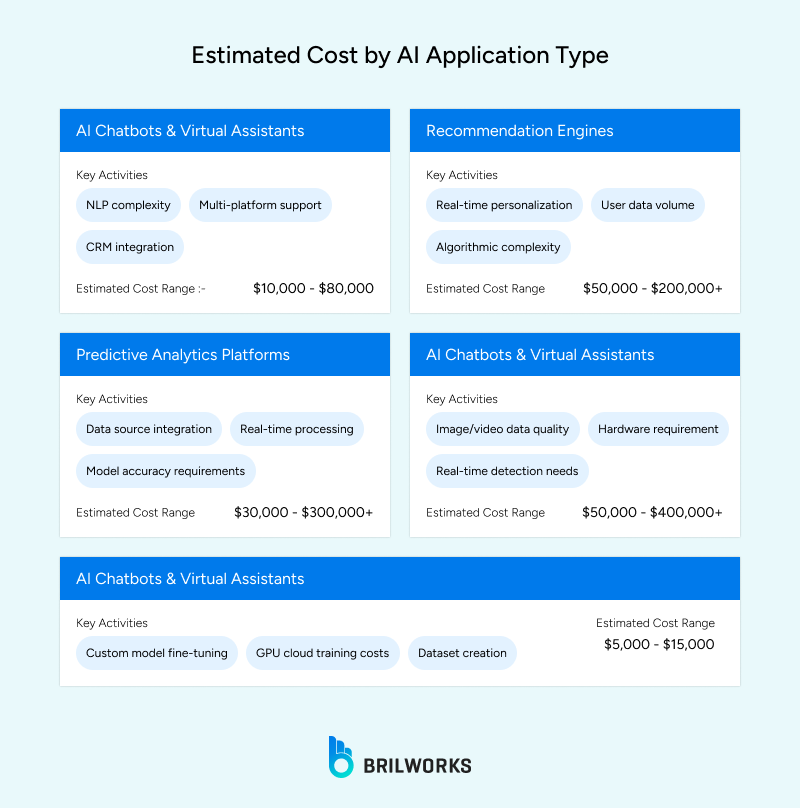
Concrete examples provide a practical benchmark for your project. The following tables break down estimated costs for common AI application types and key industries, highlighting their unique cost drivers.
6.2. Estimated Cost by Industry
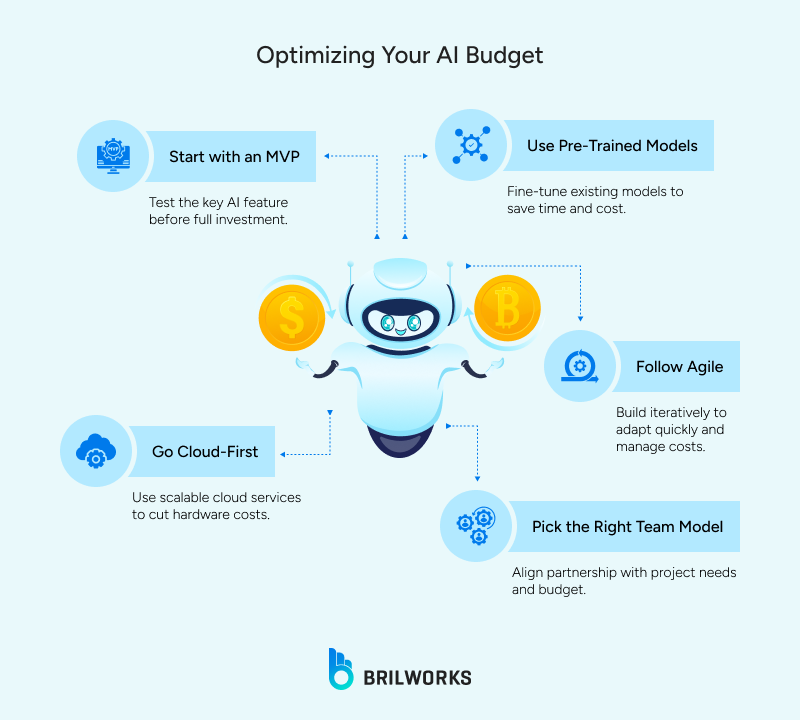
High costs are not inevitable. With a disciplined and strategic approach, you can significantly optimize your AI development budget without sacrificing quality or innovation.
Focus on building a Minimum Viable Product (MVP) to test the single most critical AI feature with a core user group. This approach allows you to validate your core hypothesis, gather invaluable real-world data, and demonstrate value to stakeholders before committing to a significant investment.
Avoid reinventing the wheel. Open-source frameworks like TensorFlow and PyTorch, along with a vast ecosystem of pre-trained models, can dramatically reduce development time and research costs. Fine-tuning an existing model for your specific use case is far more efficient than training a new one from scratch.
Eliminate large upfront capital expenditures on hardware by using cloud platforms like AWS, GCP, or Azure. Their pay-as-you-go pricing models, scalable compute resources (including on-demand GPUs), and managed AI services provide the flexibility to scale your infrastructure in lockstep with your needs, optimizing for both performance and cost.
The way you structure your partnership with a development team has a direct impact on cost, risk, and flexibility. Selecting the model that best aligns with your project's clarity and long-term goals is a key strategic decision.
An Agile methodology, with its emphasis on short sprints, iterative development, and continuous feedback, is perfectly suited for the experimental nature of AI projects. This approach prevents resource waste, ensures the project stays aligned with evolving business priorities, and allows for effective cost management through regular re-evaluation and prioritization.
The cost of developing an AI application is not a fixed barrier but a series of strategic variables that can be managed. By understanding the key drivers, you can architect a budget that is both realistic and optimized for success. The true goal is not merely to minimize spending, but to maximize the value and long-term impact of your investment.
Ultimately, this cost should be framed as an investment in a compounding asset that drives future efficiency and innovation. The journey from an initial concept to a high-ROI AI solution requires a combination of technical precision and a strong strategic partner.
To successfully navigate the complexities of AI development and turn your vision into a tangible competitive advantage, engaging with an expert team is the most critical investment you can make.
Get In Touch
Contact us for your software development requirements
Get In Touch
Contact us for your software development requirements

Hello, we are BRILLIAN’S. Trying to make an effort to put the right people for you to get the best results. Just insight !

 503, Fortune Business Hub, Science City Road, Sola, Ahmedabad, Gujarat, India Pincode- 380060
 + 91 9313644148
 sales@brilworks.com


