COOPERATION MODEL
ARTIFICIAL INTELLIGENCE
PRODUCT ENGINEERING
DevOps & Cloud
LOW-CODE/NO-CODE DEVELOPMENT
INDUSTRY
FRONTEND DEVELOPMENT
CLOUD DEVELOPMENT
MOBILE APP DEVELOPMENT
LOW CODE/ NO CODE DEVELOPMENT
EMERGING TECHNOLOGIES



 3 mins read
 Last updated December 26, 2025
Offer letters, document generation, employee entry….. leave requests……..every other day, HR professionals confront these tasks that can be made almost effortless by integrating software into the workflow.
For example, we built an HR system for a client that included an announcement portal, so HR no longer needed to send emails for every update. Employees could check their leave balances themselves, reducing repeated questions to HR. The system also let users manage payslips, personal data, and leave history in one place.
Before the HR software, their HR professional answered questions like:
“How many leaves do I have left?”
or
“Can you send my payslip?” every other day.
Each time, they had to open a specific employee record, check leave dates, balances, and past usage, and then respond. This is the reality of how many hundreds of companies operate today.
Think for a moment….are these tasks creative?
Are they high-value tasks?
The answer is no.
Routine, repetitive, and time-consuming tasks can now be handled by technology. However, systems still struggle with high-judgment work, such as screening candidates and choosing the right person from many applications. Even the most advanced AI tools can only help with these decisions, not replace them.
But that’s not our focus here.
We’re talking about tasks that could have been automated long ago. With the right software, companies can save hundreds of hours by removing basic HR work. Here are some HR tasks that can realistically be automated with the right software.
We’re talking about tasks that could have been automated long ago. With the right software, companies can save hundreds of hours by offloading routine HR work to AI. If you want to see how HR tools support routine tasks, explore our guide on the benefits of HR software.
Once you understand the upside, the next step is to look at which tasks you can actually automate. Here are some HR tasks that can realistically be automated with the right software.
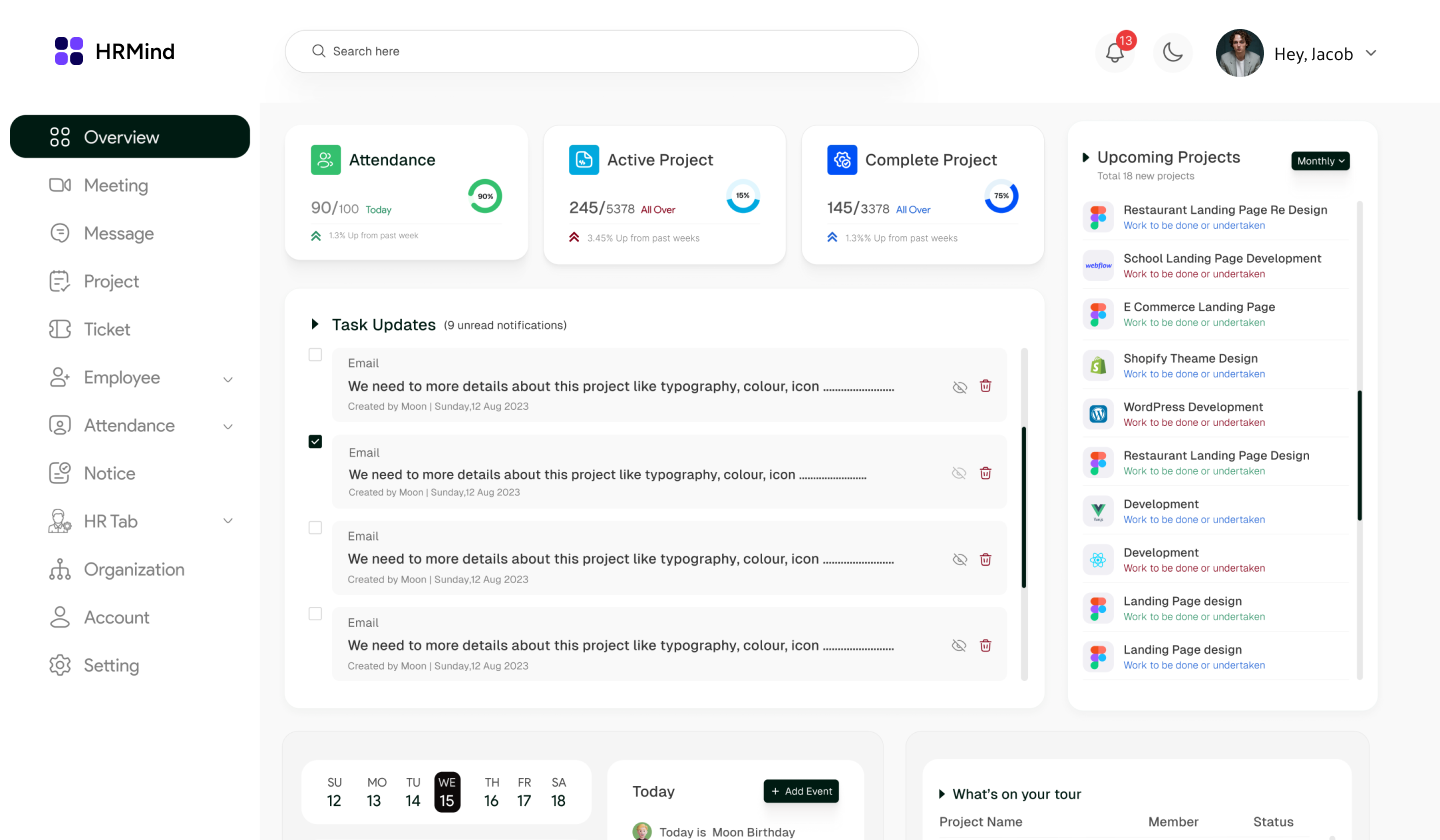
After a candidate accepts an offer, software can automate many steps. Modern systems start workflows as soon as you enter the name, email, and start date. They can send welcome emails, add data to the system, and send reminders automatically. With this setup, onboarding should take less than an hour for HR.
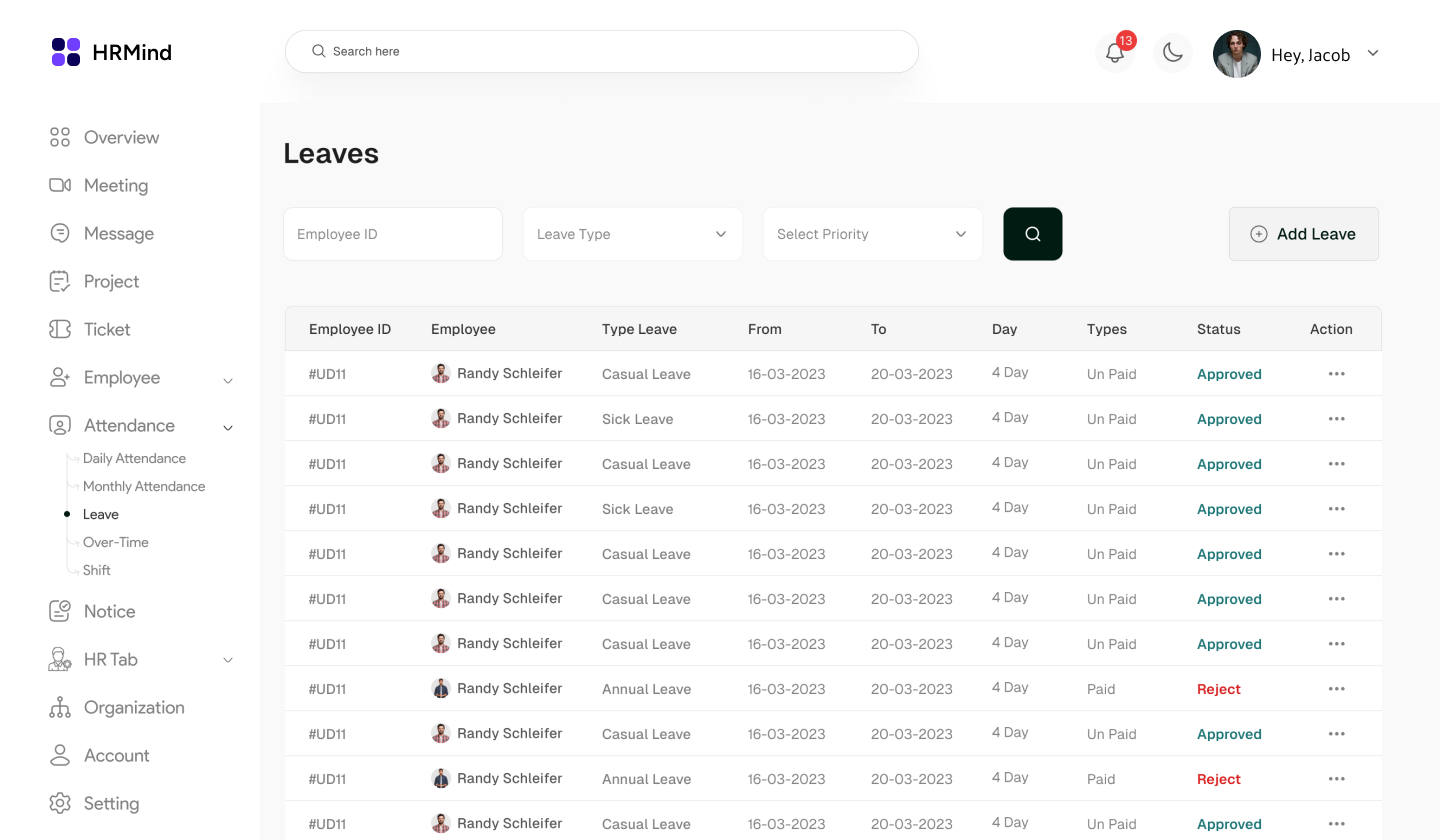
HR software makes leave management easier and more transparent. Managers and HR can review and approve leave requests in one place. This removes the need to track and update leaves through emails or spreadsheets.
The system tracks how many leaves each employee can take. It follows company policies for carryover, weekends, and holidays, and flags any conflicts automatically. This means HR no longer needs to do manual calculations.
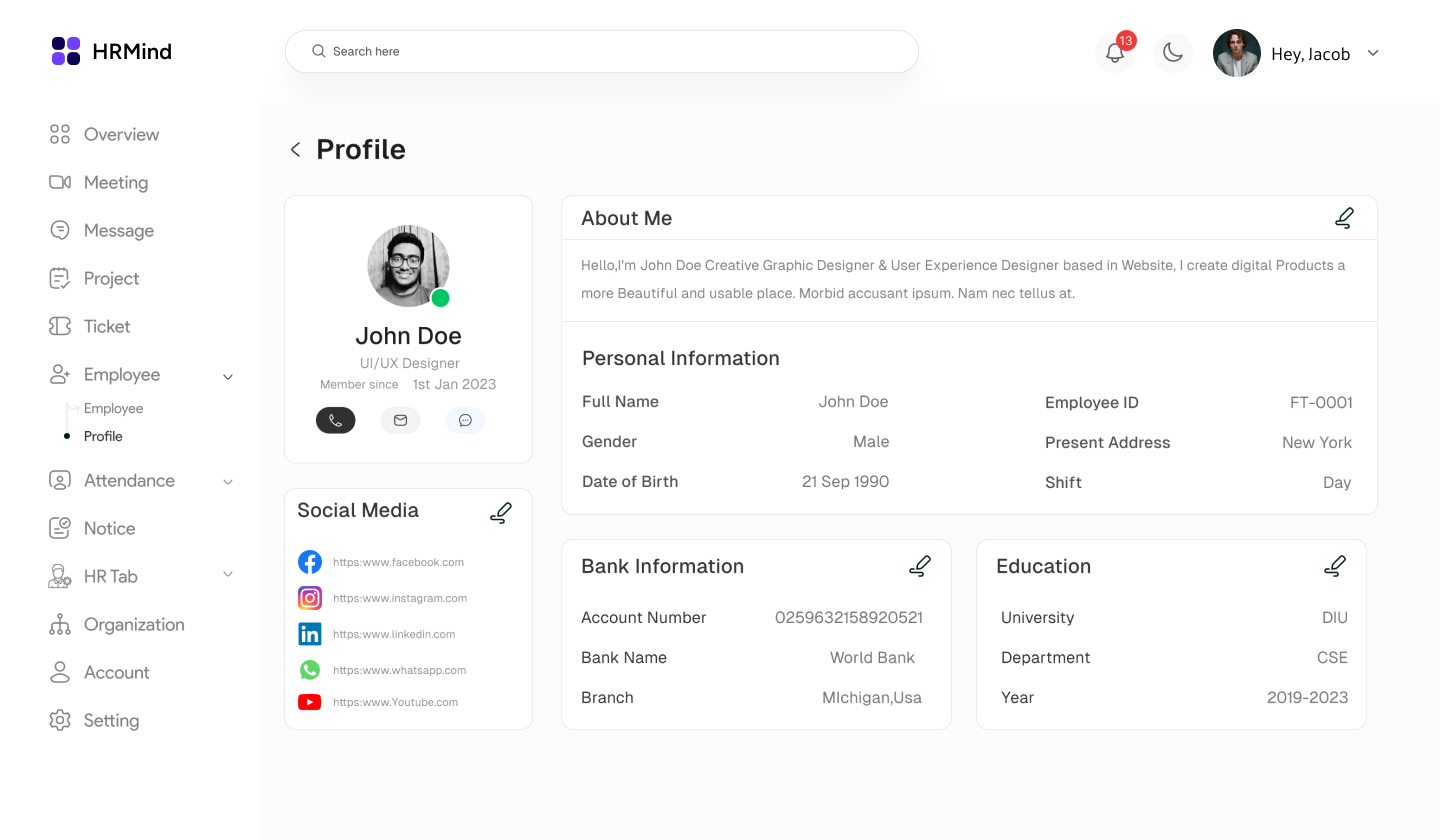
If an employee changes their bank account, they usually send the details to HR, who then updates the system. With a self-service portal, employees can update their own information, like address, bank account, and other personal details.
This process should be simple, so HR doesn’t have to chase documents or follow up. If details aren’t updated, the system can send automatic reminders. The self-service feature also helps during onboarding.
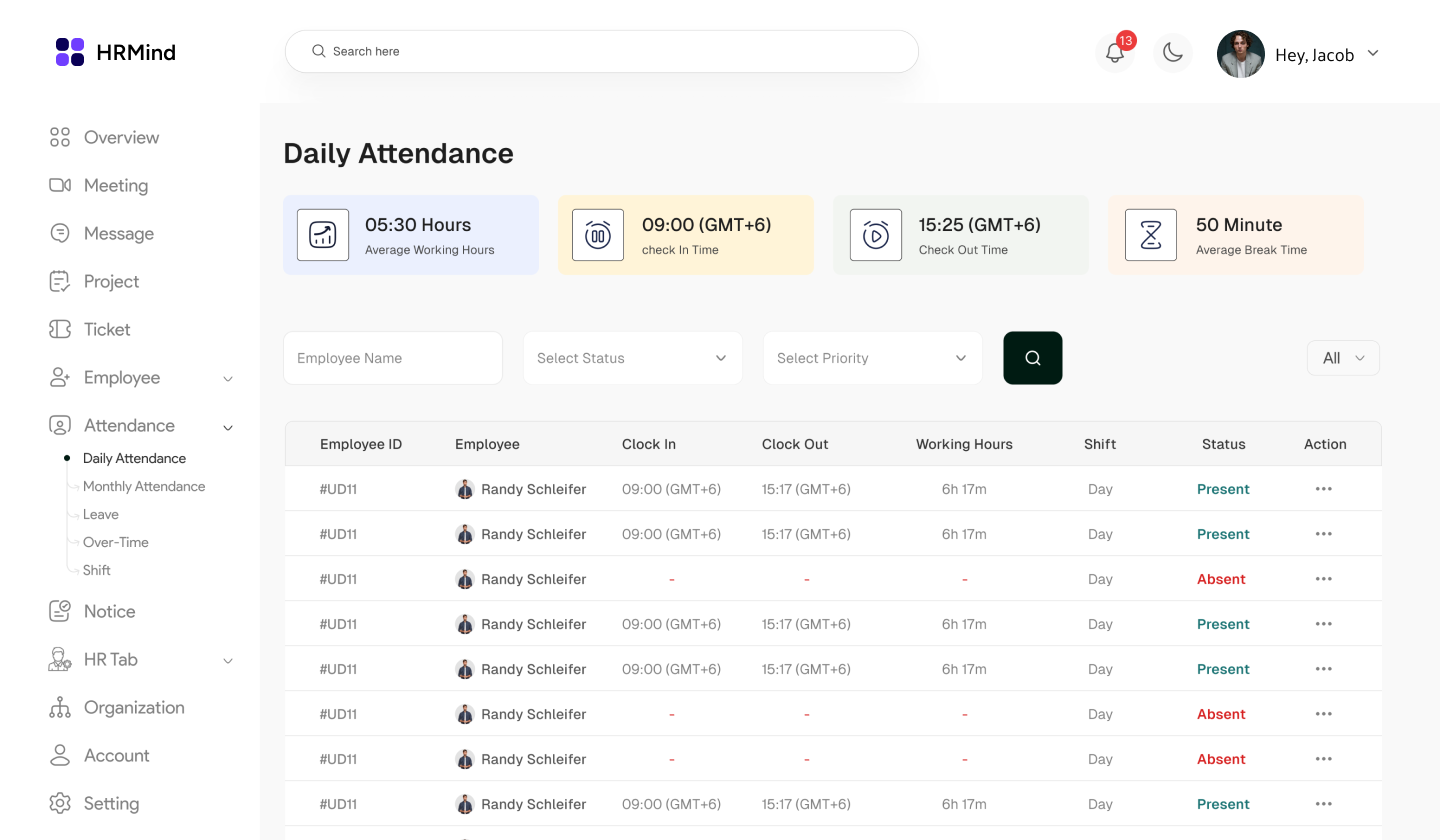
Both HR and employees should know how many hours each person has worked. The software keeps all attendance data in one place. When employees check in, the system records their login time. It automatically saves login and logout records, giving management clear logs. The system also tracks late arrivals, absences, and overtime, automating attendance and record-keeping.
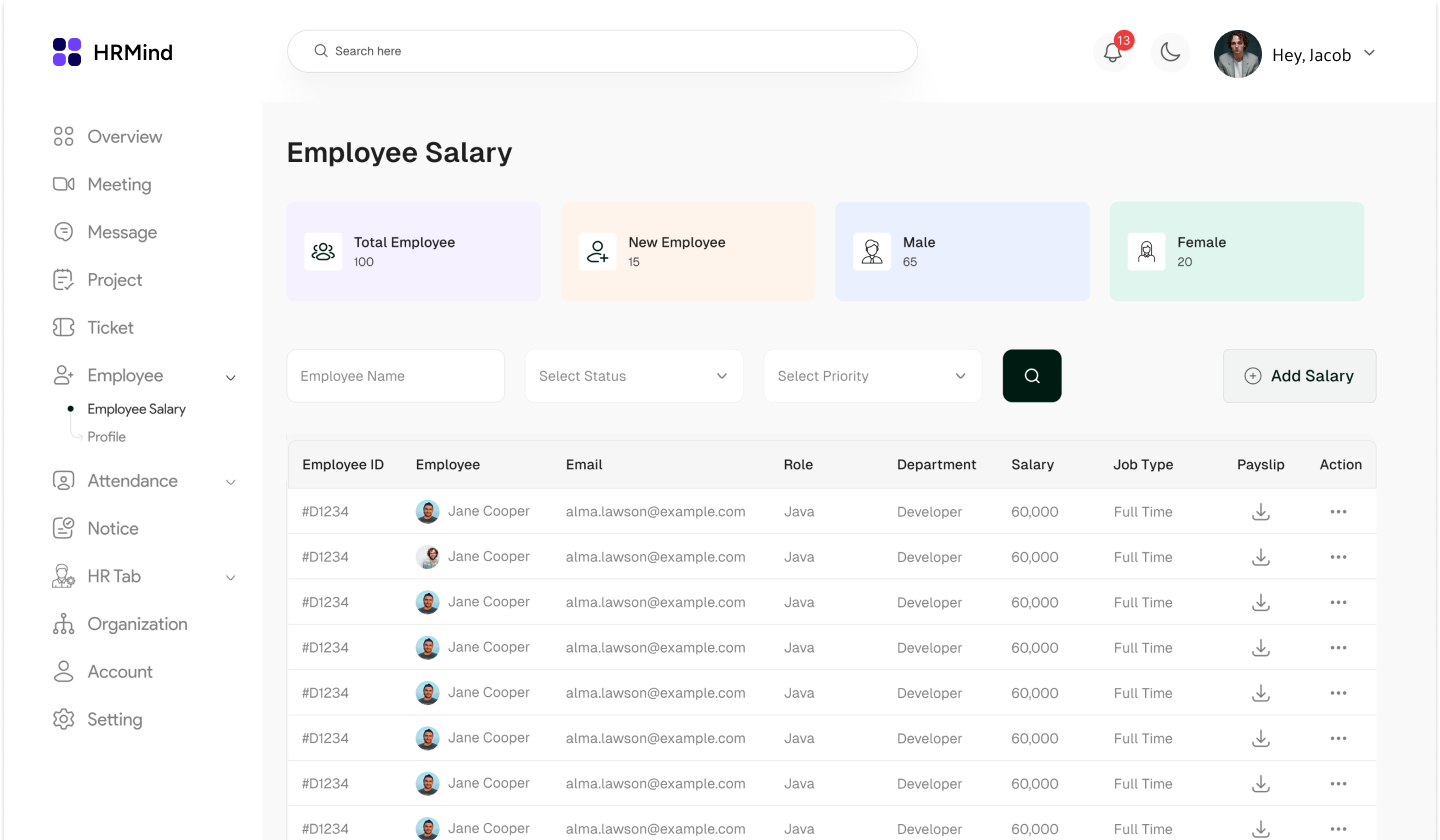
Collecting payroll data, calculating salaries and taxes, and transferring salaries to employee accounts can be time-consuming and error-prone. With AI tools supporting HR professionals, these tasks become easier and more accurate.
Many steps in recruitment can be automated. For example, HR can sync emails and responses in one place and sort applications as applied, shortlisted, or rejected. If 50 people apply for a job, the system can update all applications automatically. It can also send calendar invites when interviews are scheduled.
If:
You are searching resumes in Gmail
Interview dates get missed
Candidates complain about no response
Your recruitment is broken, not “busy.”
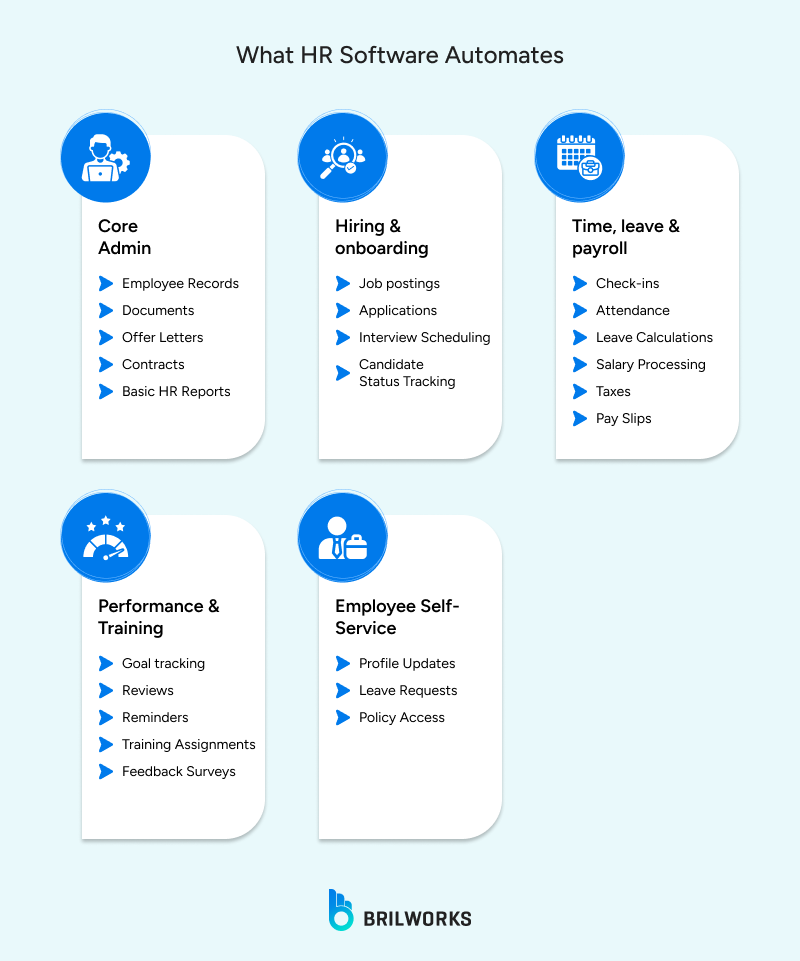
Employee data entry and updates, such as personal details, role changes, documents.
Generate offer letters, contracts, NDAs, and policy documents.
Basic HR reporting, headcount, attendance, turnover.
Job postings, applications, and interview scheduling.
Group applications as applied, shortlisted, or rejected automatically.
Automatic work hours capture through check-ins and check-outs.
Automatic calculation of attendance, late marks, absences.
Leave requests without HR doing calculations or updates.
Payroll from attendance and leave data, salaries calculations and deductions, applies taxes, and generates payslips.
System-driven goal setting, review cycles, and reminders.
Training assignments, completion tracking, and records stay linked to employee profiles.
Feedback and pulse surveys.
Profiles update, payslips download, leave requests, and check policies without contacting HR.
Routine questions (leave rules, holidays, benefits) through automated responses.
An ISG survey found that 46% of organizations saw “clear business value” from using HR SaaS. According to Mercer’s 2024 HR tech confidence check, satisfaction with HR tech rose to about 65%, while dissatisfaction dropped to 23%. This shows more leaders feel their HR tools are working well.
At Brilworks, we create custom, AI-powered HR software to help startups manage HR operations more efficiently. To learn how our solutions can automate your HR processes, reach out to one of our experts.
Get In Touch
Contact us for your software development requirements
Get In Touch
Contact us for your software development requirements

Hello, we are BRILLIAN’S. Trying to make an effort to put the right people for you to get the best results. Just insight !

 503, Fortune Business Hub, Science City Road, Sola, Ahmedabad, Gujarat, India Pincode- 380060
 + 91 9313644148
 sales@brilworks.com


