Last updated May 7, 2026
Generative AI Challenges in 2026 and How to Solve Them for Teams

5 mins read
Summarize with AI:


Data
AI
The Stack Underneath
)
You’ve likely heard the buzz about AI, but the reality can be trickier than it sounds. Businesses are excited about the possibilities, yet navigating generative AI challenges is not straightforward. Even the most ambitious AI projects can hit roadblocks. Overcoming these hurdles is essential for smooth AI adoption and achieving real, measurable results.
From messy datasets to talent shortages, many companies find that turning AI’s potential into practical outcomes is harder than expected. In this post, we’ll explore the most common generative AI challenges and share strategies that can help your business move from concept to results without getting stuck along the way.
You’ve likely heard the buzz about AI, but the reality can be trickier than it sounds. Businesses are excited about the possibilities, yet navigating generative AI challenges is not straightforward. Even the most ambitious AI projects can hit roadblocks. Overcoming these hurdles is essential for smooth AI adoption and achieving real, measurable results.
From messy datasets to talent shortages, many companies find that turning AI’s potential into practical outcomes is harder than expected. In this post, we’ll explore the most common generative AI challenges and share strategies that can help your business move from concept to results without getting stuck along the way.
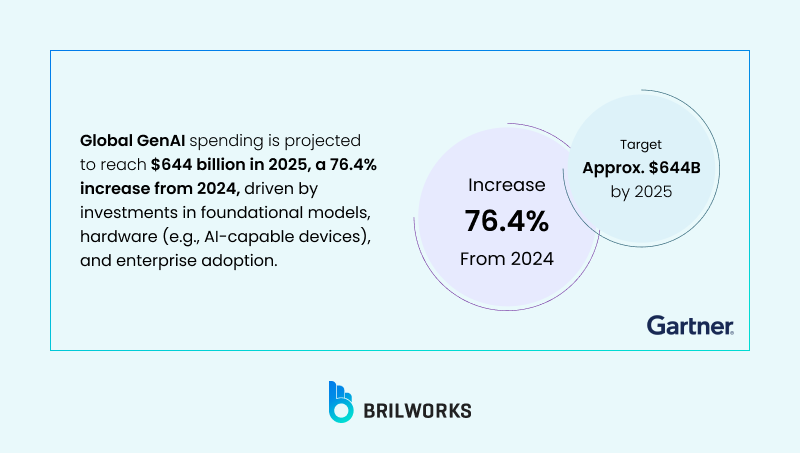
The successful adoption of generative AI is becoming a differentiator for companies. However, there’s a significant gap between expectations and reality.
Generative models need good data to do their job. Without relevant data to feed them, they’re practically ineffective. Your technology won’t deliver substantial results if the data is scattered all over the place.
Poor data comes in many forms and can be harmful in various ways. Incomplete information can lead to skewed predictions, making decision-making less reliable. One of the biggest challenges in AI implementation is poor data quality.
If the data is unreliable, you're at a disadvantage right from the start.

You will be surprised to know that every day, more than two quintillion bytes of data are created. A big challenge for major AI development companies today is data management.
For advanced AI models, a company needs a large amount of data, and for this, a strong data management system is a must-have. In your organization, different types of data serve different needs. In addition, evolving regulatory compliance is making this thing more challenging.
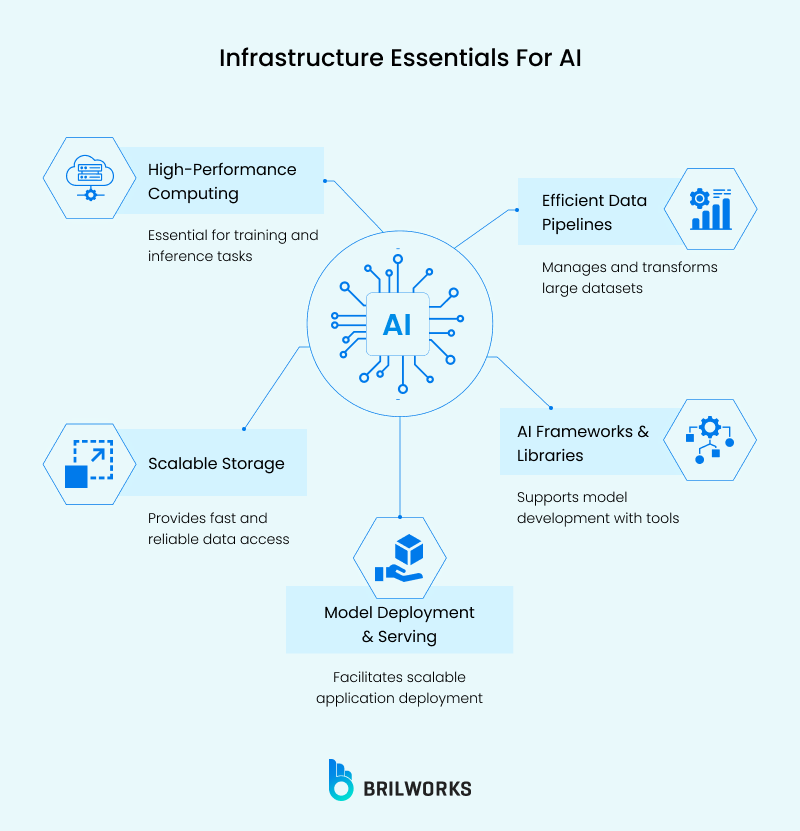
Many organizations run into infrastructural bottlenecks. While many issues are out of reach for small and medium-sized businesses, larger companies may need to explore solutions to ensure their infrastructure can keep pace with these workloads.
It requires high-end compute systems to handle the large volume of data required by generative AI models. AI program systems are data-hungry. They consume and produce a gigantic amount of data that is beyond the processing capabilities of conventional systems. Additionally, your organization must ensure that the data being used and stored is secure. Ultimately, this requires a significant investment.
94% of organizations recognize the need to modernize their data systems within the year. [Hakkoda]
76% of data management decision-makers struggle to understand their data and 82% face difficulties in controlling and forecasting data costs. [Capital One study]
60% of industrial companies in Germany, Austria, and Switzerland lack qualified professionals for in-depth data analysis. [Digitalization 2024]
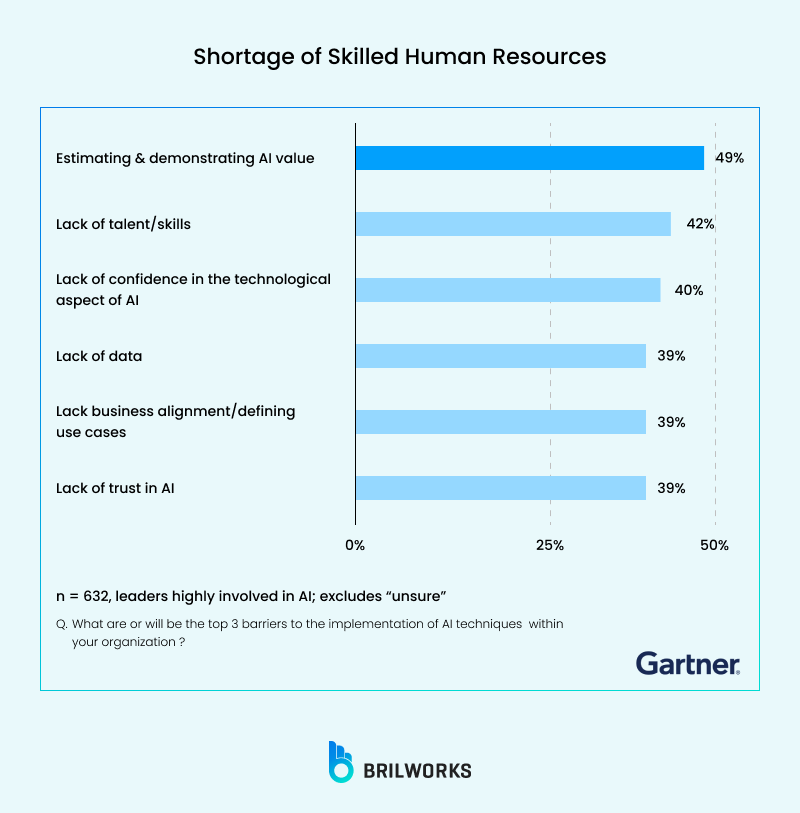
There has been a sharp increase in AI-related job postings over the last few years. AI-related job postings have increased by 21% annually since 2019, but the supply of qualified talent is not growing fast enough. This widening talent gap is slowing AI adoption.
Let's talk about some of the common challenges that companies may face when implementing AI solutions.
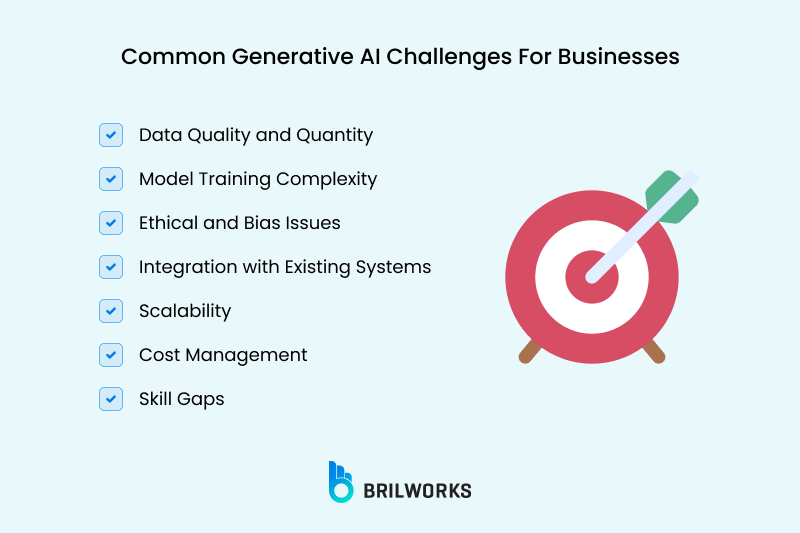
Generative AI models rely heavily on large and diverse datasets, including text, audio, and images. Limited, low-quality, or biased data can lead to outputs that are inaccurate, inconsistent, or lack creativity. For example, models trained on high-resolution, diverse datasets produce better outputs, while those trained on poor-quality data generate blurred or unrealistic results.
Solution:
To overcome this generative AI challenge, businesses should focus on clean, relevant, and consistent data. Strategies include:
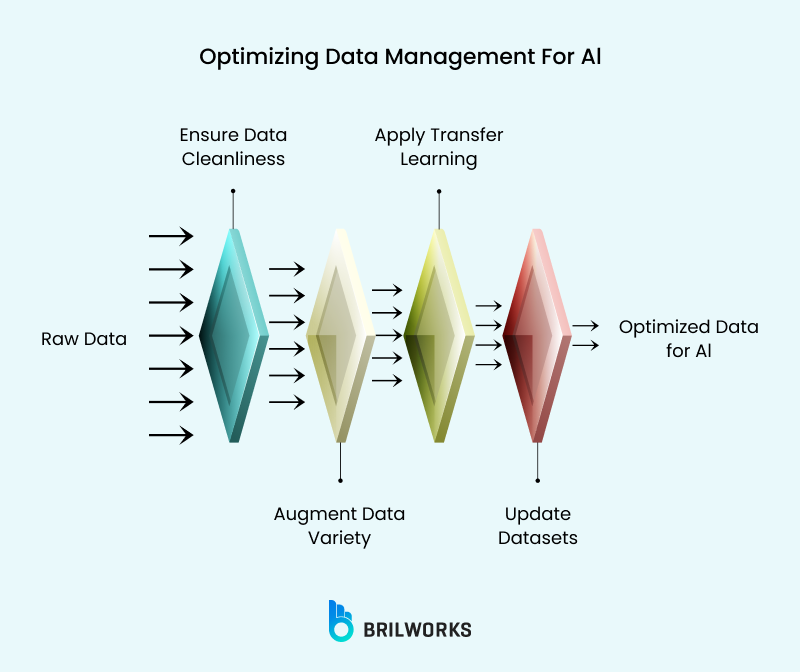
Data cleaning and curation: Source data from reliable providers and remove errors or inconsistencies.
Data augmentation: Expand datasets by creating variations of existing data—rotating images, paraphrasing text, or generating new samples.
Transfer learning: Fine-tune pre-trained models on smaller datasets to enhance performance.
Regular data updates: Keep datasets current to maintain model accuracy and relevance.
Implementing these methods ensures AI systems operate at their full potential while reducing errors caused by poor data quality.
Training generative AI models is resource-intensive. Small and medium businesses often face infrastructural limitations, lacking high-performance GPUs, TPUs, and computing clusters.
Training large language models from scratch can take weeks or months, consuming high energy and requiring expert personnel. The complexity of hyperparameter tuning, overfitting prevention, and model stabilization adds further barriers.
Solution:
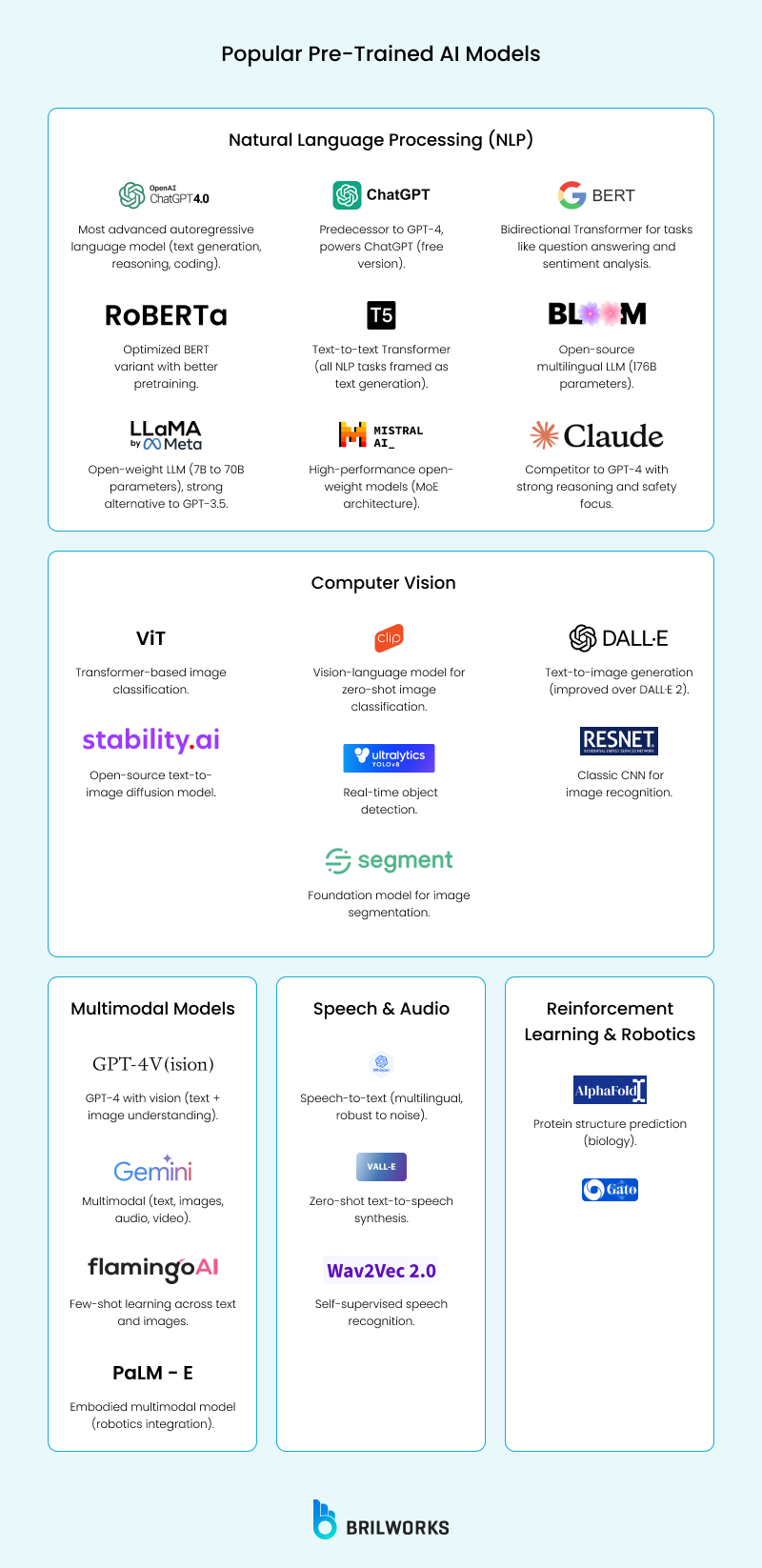
Many companies leverage pre-trained models from providers like OpenAI or Hugging Face. These models are already trained on large, diverse datasets and can be fine-tuned for specific tasks. This approach reduces time, cost, and expertise requirements.
Alternatively, businesses can outsource AI development to specialized firms. These companies handle model training and integration, guiding organizations through complex steps without the need to build an in-house team.
Generative AI models can inherit biases from human-generated data, producing unfair or discriminatory outcomes. For instance, a hiring AI trained on biased datasets may favor certain demographics, and image-generation models may underrepresent specific groups.
Solution:
Addressing this generative AI challenge requires a multi-pronged approach:
Fairness metrics: Use tools like IBM Fairness 360 or Google’s What-If Tool to detect and monitor bias.
Diverse evaluation teams: Involve individuals from varied backgrounds to review AI outputs and identify blind spots.
Transparency: Document how models are developed, what data is used, and decision-making pathways.
Regular audits: Continuously monitor AI systems and perform impact assessments to manage risks.
Collaborating with universities, organizations, and diverse communities helps create transparent, ethical AI systems while reducing bias.
Businesses often operate on a mix of legacy, modern, and cloud systems. Integrating generative AI into this infrastructure can be challenging due to incompatible programming, outdated systems, mismatched data pipelines, and limited processing speeds. Integration must also avoid disrupting existing workflows.
Solution:
Assess and optimize: Review current systems, hardware, software, and programming languages before integration.
APIs and middleware: Use connectors to integrate AI tools without overhauling existing infrastructure.
Phased deployment: Start with pilot projects in controlled environments to detect latency, data mismatches, and other issues.
Iterative rollout: Collaborate across teams for smooth integration and reduce overall complexity.
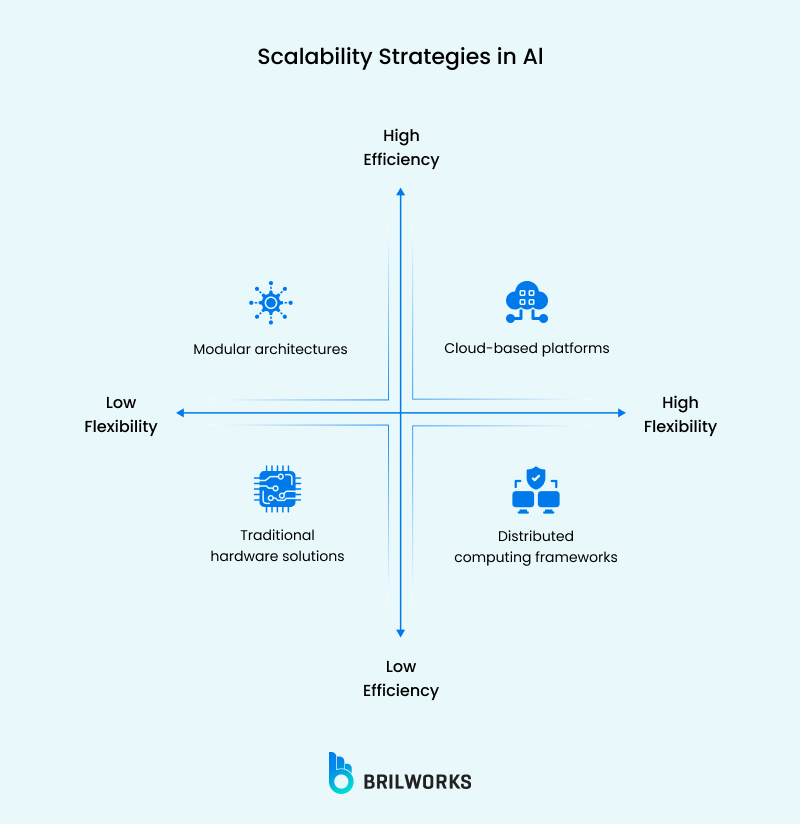
Generative AI demands large datasets and high-end infrastructure. Many businesses struggle to scale AI internally due to costs, energy consumption, and technical limitations.
Solution:
Cloud platforms: Use AWS, Google Cloud, or Azure to access scalable computing resources on demand.
Modular architecture: Design systems where individual components can scale independently.
Distributed computing: Use TensorFlow or PyTorch across multiple machines for improved performance.
Monitoring tools: Implement real-time tracking to identify bottlenecks and optimize resources.
Cloud services and modular designs allow businesses to scale AI efficiently without investing in in-house hardware.
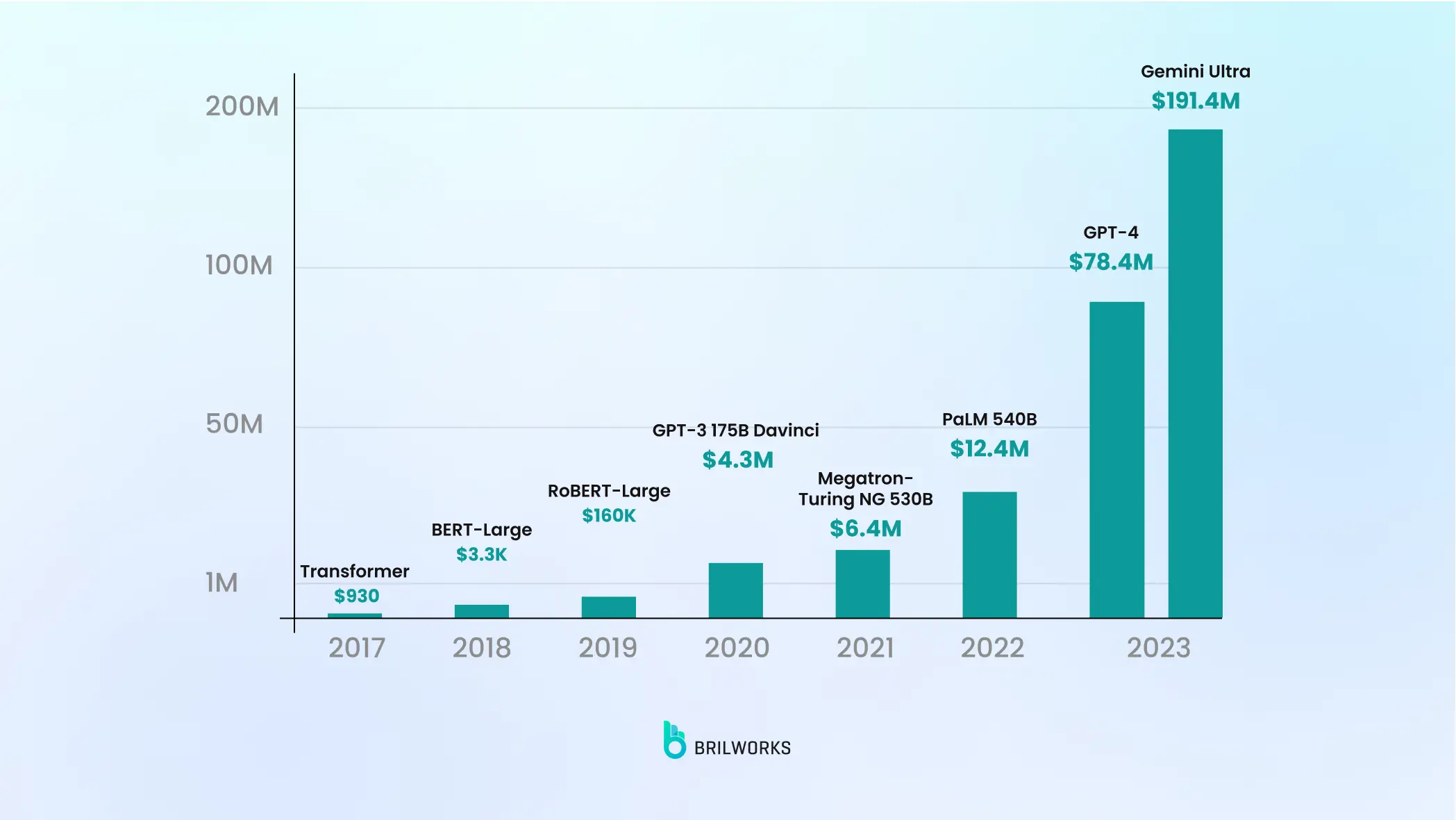
Building and maintaining generative AI solutions is expensive. High-end computers, GPUs/TPUs, and skilled personnel increase upfront costs, which can strain SMB budgets.
Solution:
Incremental approach: Start with small projects or lightweight models to reduce initial investment.
Cloud and pay-as-you-go services: Minimize hardware costs by using scalable on-demand infrastructure.
Pre-trained models: Reduce both training costs and development time.
Set clear objectives: Estimate cost versus expected benefits before starting a project.
This approach ensures AI initiatives are cost-effective while minimizing financial risk.
The demand for qualified AI professionals exceeds supply, leaving many organizations unable to implement AI effectively.
Solution:
Upskilling: Train internal teams with foundational machine learning courses and hands-on projects.
Educational partnerships: Collaborate with universities to access talent pipelines.
Outsourcing: Engage expert firms or consultants for specialized AI tasks, avoiding the need for a full in-house team.
Addressing skill gaps is critical to overcoming generative AI challenges and enabling successful adoption.
Here are some key strategies for building a successful AI program.
AI systems can produce biased or unfair outputs if guidelines aren’t defined. Establish clear rules for acceptable behavior, data use, and outcomes. Following these guidelines ensures your AI programs meet ethical and legal standards. This is crucial for responsible AI adoption.
AI models should be evaluated continuously, not just after deployment. Use auditing frameworks to track risks, detect anomalies, and validate outputs. Regular audits make AI implementation more reliable and transparent.
Understanding how models make decisions helps identify potential biases or errors. Explainable AI tools reveal model reasoning, improving accountability. This approach also supports trustworthy AI adoption across your organization.
Include individuals from different backgrounds and expertise in model evaluation. They can spot blind spots and biases that your internal team might miss. Collaboration ensures fairer and more inclusive AI systems.

In this article, we have explored some key integration challenges in AI development and discussed ways to overcome them.
Brilworks is an expert AI development firm. We strive to solve businesses' unique challenges with tech-driven solutions, including the development of AI solutions.
AI development requires significant effort, investment, and highly skilled talent, which may be out of reach for many small and medium-sized businesses. Scaling an AI program with an in-house setup can be challenging for many companies.
However, with the right strategy and by partnering with a generative AI development company, you can build AI solutions at a surprisingly affordable cost. Brilworks offers cost-effective AI development services, helping businesses solve complex challenges and drive transformation through innovative solutions. Need guidance on getting started with AI development?
Use tools that analyze your models for fairness. Regularly check up on the tools and make adjustments as needed. It’s also important to train your models on a wide range of data that includes all kinds of people. Then, there’s no risk of favoring certain groups over others. Models can pick up biases from the data or algorithms they learn from. To fix this, make sure you're using a wide range of data that covers all kinds of people. You can also use tools to check the fairness of your models and keep adjusting them as needed.
Data privacy is a big issue in AI. You must ensure strong security measures are in place to protect your sensitive data. There are a few methods you can use. Data encryption, making the data anonymous, and regular security updates are all viable ways to protect your sensitive information.
Generative AI raises ethical questions like copyright issues, fake content, and job loss. You should create ethical guidelines for your AI projects. Do a thorough analysis to see the potential risks and benefits. Work with other people to address ethical concerns and make sure you develop AI responsibly.
Start by figuring out where AI can help your business. Create a clear plan for using AI, including how much money to spend, training your people, and setting up the necessary systems. Work with AI experts to implement effective solutions. Keep evaluating and improving your AI projects to get the most out of them.
You might also like

Hello, we are BRILLIAN’S. Trying to make an effort to put the right people for you to get the best results. Just insight !