COOPERATION MODEL
ARTIFICIAL INTELLIGENCE
PRODUCT ENGINEERING
DevOps & Cloud
LOW-CODE/NO-CODE DEVELOPMENT
INDUSTRY
FRONTEND DEVELOPMENT
CLOUD DEVELOPMENT
MOBILE APP DEVELOPMENT
LOW CODE/ NO CODE DEVELOPMENT
EMERGING TECHNOLOGIES



 3 mins read
 Last updated January 13, 2026
Technology has advanced so much that many healthcare services can now be digitalized, including decision-making tasks. For example, an AI tool can process all the data you give it and make decisions much like a human would.
Imagine you run a small clinic and want to use AI for scheduling and booking appointments. The AI can check your current schedule, see which slots are open or booked, and handle the whole process automatically, with little need for human help.
In this example, a small clinic might not have its data organized well enough for the AI to work effectively. For healthcare professionals, development is now easier and more affordable because AI can handle many time-consuming tasks. This lets small business owners and solo founders build apps and services that used to require huge investments.
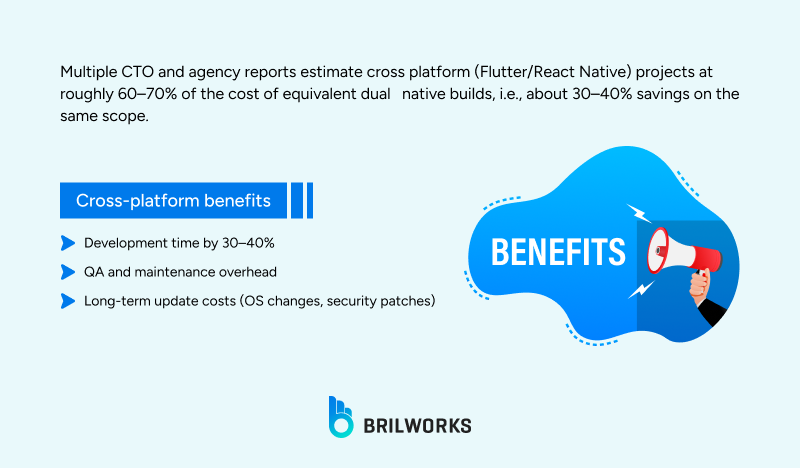
Choosing cross-platform development is an important first step. It can cut your development costs by 40 to 50 percent. Besides saving money, it also means you only have to manage one codebase instead of two.
Whether you want to build a basic tool or something complex, don’t try to add everything else once. Many founders make the same mistake of trying to build everything at once.
Every choice you make adds to your costs, including technology and hiring decisions. We’ll cover these factors later. The proven method is to start small by focusing on a specific problem you believe can be handled through a technical solution.
If you’re unsure about your main problem, getting advice can help. At Brilworks, we offer free consultations for startups and individuals who want to build a digital solution. From our experience, our successful clients didn’t start out big. They began by building a basic platform and improved over time.
In healthcare, basic services like appointment booking platforms and self-service portals are common starting points. You can convert them or integrate them into a comprehensive system by adding more features later.
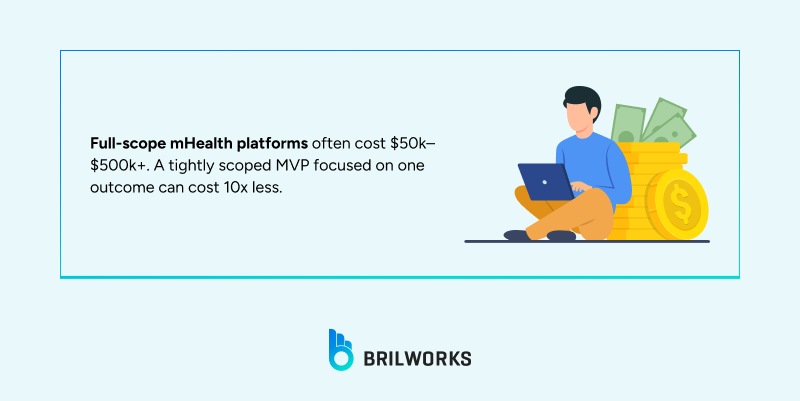
Your first version (or MVP) should solve one problem, not try to replace your whole system.
If you want to reduce no-shows, you can build an appointment booking and reminder portal.
If you want to streamline admin work, self-service scheduling is a practical solution.
The technology you choose influences your development costs. For cross-platform apps, React Native and Flutter are the default options. Both let you build mobile apps that perform almost like native apps.
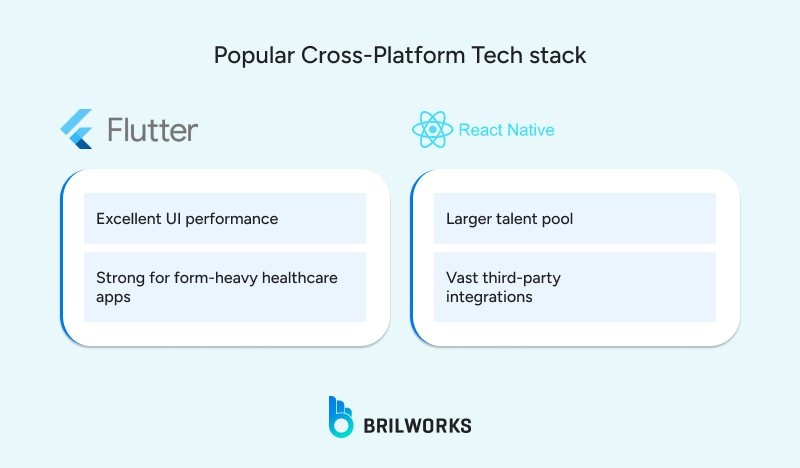
Going with React Native can be a real cost differentiator as it is usually easier and faster to hire experienced React Native developers than other specialists.
If you don’t need your app in the app store, a responsive web app is often the most affordable option. Begin with a mobile-first web app that feels like a mobile app. This lets you test your idea without dealing with the App Store or Play Store. If it works well, you can convert it to a full mobile app later.
Using Backend-as-a-Service (BaaS) tools like Firebase, Supabase, or AWS Amplify can cut backend costs by 40 to 75 percent compared to custom builds. Today, more teams are using BaaS for its cost-effectiveness.
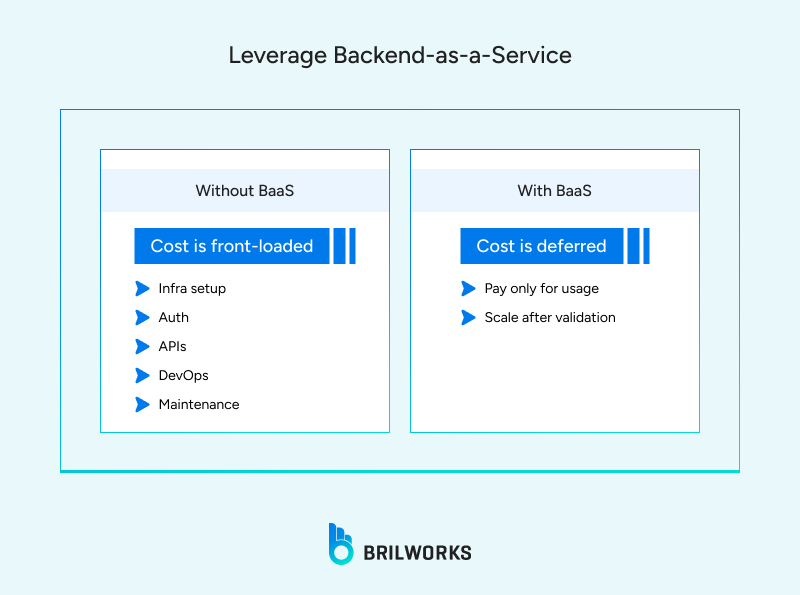
Here are some popular BaaS platforms used in mobile app development:
Firebase – Auth, database, push notifications, analytics
Supabase – Auth, Postgres DB, storage, real-time
AWS Amplify – Auth, APIs, storage, serverless backend
Backendless – No-code/low-code backend, APIs
Parse – APIs, auth, cloud functions
Appwrite – Auth, DB, storage, functions
Hasura – Instant GraphQL APIs on databases
Nhost – Auth, GraphQL, storage
Using low-code or no-code tools for a health app can reduce development costs further compared to traditional coding. Low-code and no-code tools are the default choices for newbies and experienced developers to speed up development. A common approach is to build the basic version with LCNC, then add developers for more complex features.
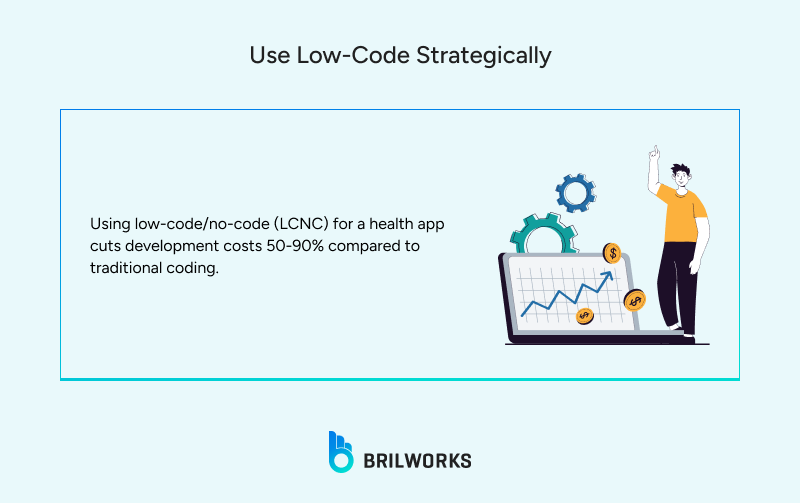
Assume you want to build a platform that includes internal tools and a patient-facing app. You can use LCNC tools for internal systems and build the customer-facing app with custom development. This mix of approaches will reduce development time and cost further.
Once your app or platform stores Protected Health Information (PHI), you will need to invest in security, increasing costs further. If your product is only for basic tasks and doesn’t store patient health data, you can build it for much less.
However, if you need EHR integration, it’s important to work with a healthcare software company that understands regulatory and security needs. Without that expertise, you might have to do expensive rework later.
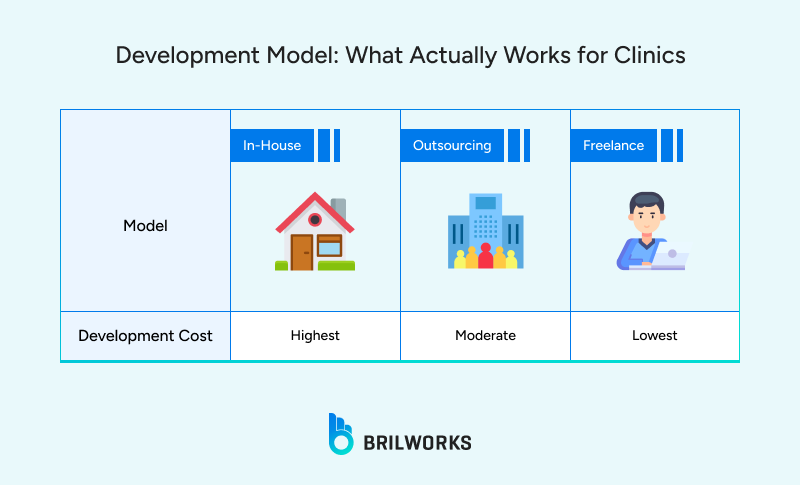
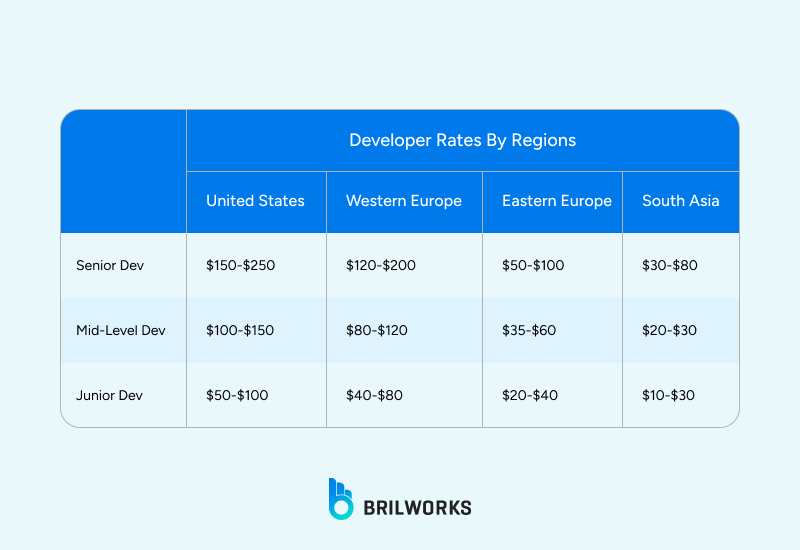
For your first version, you can use AI tools and low-code or no-code platforms. Once your platform starts to grow, you can switch to a structured approach and outsource or hire a software development company. In terms of cost, Asian developers usually cost less than those in the US or Europe, which can lower your expenses further.
Separate native iOS and Android apps
Custom infrastructure and self-hosting
Fully custom UI from scratch
Big launches without pilots
These are the main reasons healthcare apps often go over budget.
You can keep cross-platform mHealth development costs low by narrowing your scope, using cross-platform and low-code/no-code tools, and choosing a lean delivery model like solo, freelance, or nearshore teams instead of a full product company.
Want to build a healthcare app? Reach out to Brilworks to create a digital solution that will improve and streamline your daily operations.
Get In Touch
Contact us for your software development requirements
Get In Touch
Contact us for your software development requirements

Hello, we are BRILLIAN’S. Trying to make an effort to put the right people for you to get the best results. Just insight !

 503, Fortune Business Hub, Science City Road, Sola, Ahmedabad, Gujarat, India Pincode- 380060
 + 91 9313644148
 sales@brilworks.com


