COOPERATION MODEL
ARTIFICIAL INTELLIGENCE
PRODUCT ENGINEERING
DevOps & Cloud
LOW-CODE/NO-CODE DEVELOPMENT
INDUSTRY
FRONTEND DEVELOPMENT
CLOUD DEVELOPMENT
MOBILE APP DEVELOPMENT
LOW CODE/ NO CODE DEVELOPMENT
EMERGING TECHNOLOGIES



 7 mins read
 Last updated December 11, 2025
In mobile application development, the Swift vs Kotlin debate is central. These two modern programming languages have risen as the de facto standards, each dominating its native ecosystem. Swift is created by Apple, tailor-made for iOS, macOS, and its family of platforms, while Kotlin is the brainchild of JetBrains, officially embraced by Google as the preferred language for Android development.
As we unpack this comparison, we'll move past the simplistic 'iOS vs. Android' label and explore how both compare to each other, including their ventures into cross-platform functionality.
Both languages were created for native development. Swift is the quintessential native language for the Apple ecosystem. It was designed to replace Objective-C, offering a safer, more modern, and highly expressive syntax.
Consequently, when an application is developed in Swift, it compiles directly to native machine code optimized for Apple's hardware architecture, ensuring that it runs with maximum efficiency on iOS, macOS, watchOS, and tvOS. 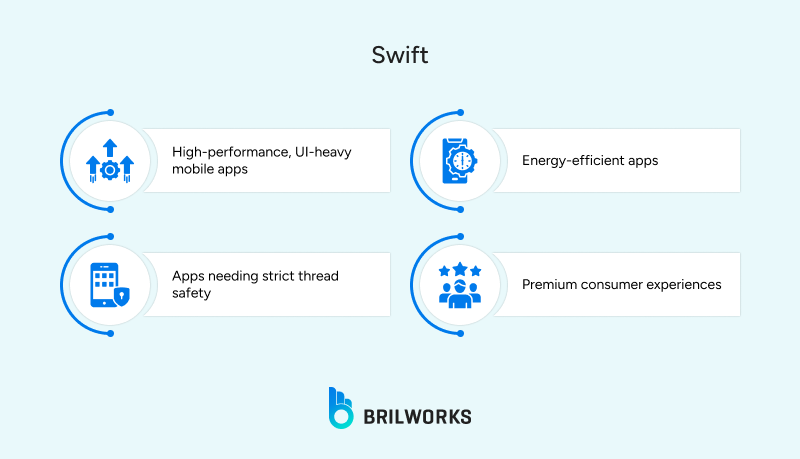
This tight-knit relationship with the platform is Swift's greatest strength, allowing for immediate adoption of new Apple features like SwiftUI and seamless integration with deep system frameworks.
Kotlin, on the other hand, is the official language for Android. It runs on the Java Virtual Machine (JVM) bytecode and, on Android devices, executes on the Android Runtime (ART). Its pivotal advantage is its 100% interoperability with Java, meaning developers can leverage the vast existing ecosystem of Java libraries and tools while enjoying Kotlin's more concise and safer syntax. 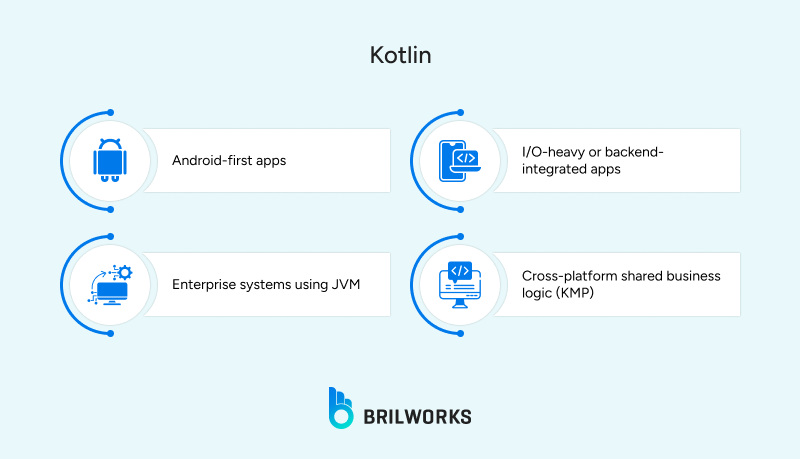
Google's endorsement in 2017 solidified its place, and today, a significant majority of professional Android developers use Kotlin, with its null-safety features leading to demonstrably fewer application crashes compared to Java.
While traditionally siloed, the ambition for code reuse has pushed both languages to look beyond their native borders, albeit with different approaches and degrees of maturity. Kotlin offers a mature path to code sharing through Kotlin Multiplatform (KMP).
|
Kotlin |
Kotlin Multiplatform (KMP) | |
|
What it is |
A language used mainly for Android apps |
A way to use Kotlin for multiple platforms at once |
|
Where it runs |
Android, JVM |
Android, iOS, Web, Desktop |
|
Main Use |
Build Android apps |
Share code between Android + iOS (and more) |
|
Code Sharing |
No sharing |
Big parts of the app can be shared |
|
iOS Support |
No |
Yes |
|
UI Work |
Write Android UI only |
You write UI separately for Android & iOS, but share the logic |
|
Learning Difficulty |
Easy to start |
Slightly more to learn (because multiple platforms) |
|
When to Use |
If you only build for Android |
If you want one codebase for Android + iOS logic |
|
Cost |
Normal |
Saves money by avoiding duplicate logic for each platform |
|
Best For |
Android beginners |
Teams building both Android & iOS |
This technology, which includes Kotlin/Native, allows developers to write the non-UI business logic, such as data models, networking, and analytics, once in Kotlin.
The language then compiles this logic to native binaries for both Android (on the JVM) and iOS (using the LLVM compiler). The user interface, however, remains native, Jetpack Compose on Android, and SwiftUI or UIKit on iOS, ensuring a true native look and feel on each platform while achieving substantial code reuse in the background. This approach has seen significant corporate adoption for its strategic cost savings and maintenance efficiency.
Swift’s venture into the multi-platform space has been less focused on Android mobile apps and more on broadening its server-side and desktop reach across Linux and Windows. Nevertheless, with the release of the Swift SDK for Android, it is technically possible to write Android applications or shared library modules in Swift.
This remains a newer, less-adopted approach, and typically, Swift code on Android must be accessed via the Java Native Interface (JNI), making the integration far more complex than utilizing Kotlin for iOS code sharing. For now, Swift’s primary cross-platform success is predominantly contained within the Apple ecosystem itself.
The core distinction, therefore, rests on who owns the shared logic: Kotlin has built a strong, proven bridge to share non-UI code across the major mobile platforms, while Swift remains primarily optimized to be the singular, best-in-class language for everything Apple.
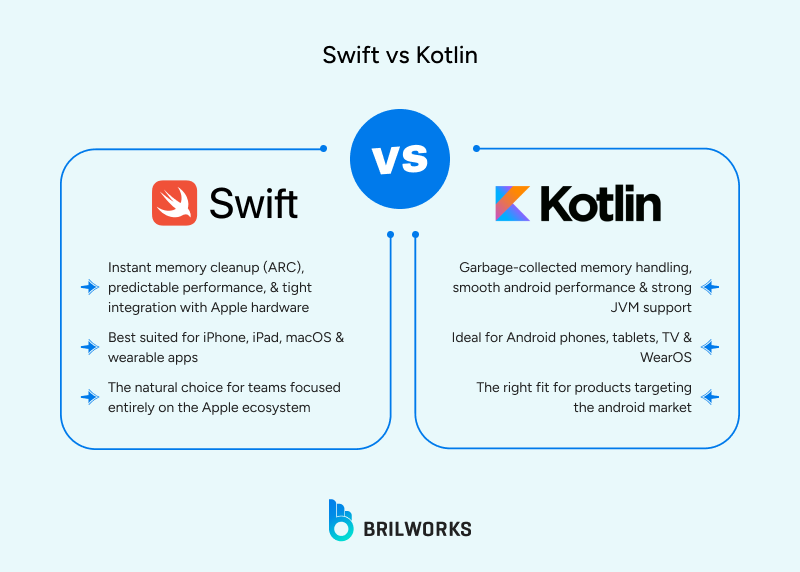
Comparing the raw speed of Swift and Kotlin is challenging because they operate on fundamentally different virtual machines and hardware ecosystems.
Swift was engineered specifically with speed in mind. As a compiled language, it translates directly into optimized machine code by the LLVM compiler, giving it extremely fast execution times.
Swift’s performance is tightly linked to its memory management system, Automatic Reference Counting (ARC). ARC tracks and manages memory automatically at compile time, reducing the runtime overhead typically associated with garbage collection.
This ensures predictable, high performance, which is especially important for graphic-intensive or high-performance computing tasks on resource-constrained mobile devices.
Ultimately, this makes Swift the ultimate choice for performance-critical applications on Apple hardware.
Kotlin, on the other hand, runs on the highly optimized Java Virtual Machine (JVM). On Android, it executes on the Android Runtime (ART), which performs just-in-time and ahead-of-time compilation. This results in execution performance that is virtually on par with optimized Java.
Furthermore, Kotlin's modern features, like coroutines for asynchronous programming, help developers write highly responsive, non-blocking code.
The mechanics of memory handling is one of the most significant technical distinctions between the two languages.
Swift uses ARC, leading to predictable memory deallocation immediately when an object's reference count drops to zero. This leads to fewer and shorter pauses in execution.
In contrast, Kotlin relies on Garbage Collection (GCA) for automatic memory management, which handles cleanup in the background.
While GCA is efficient, it can occasionally introduce brief "pauses" (known as stop-the-world events) when the garbage collector runs, though these are rare and typically managed well in modern runtimes.
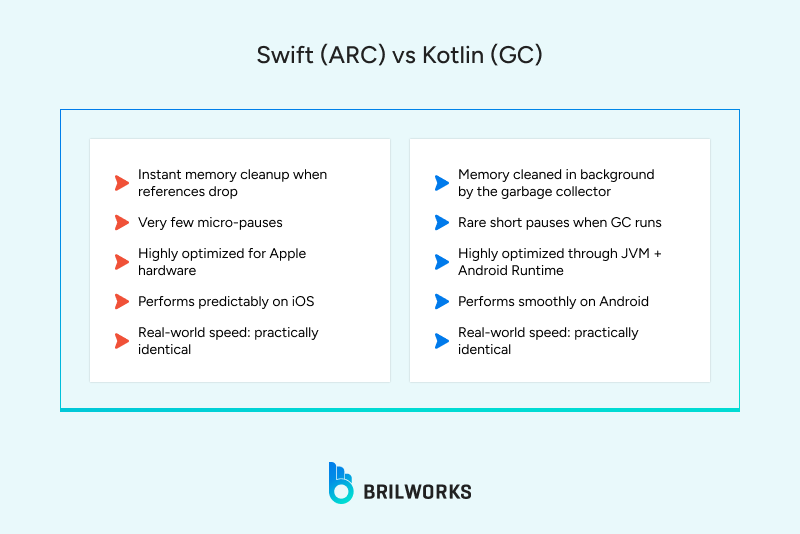
The verdict on performance is nuanced: for native app development, the difference in perceived speed between Swift on iOS and Kotlin on Android is negligible for the vast majority of consumer and enterprise applications. Both deliver excellent, near-native speeds.
The choice hinges more on platform-specific optimization: Swift is deeply optimized for Apple Silicon and its hardware, while Kotlin benefits from decades of rigorous JVM and Android Runtime optimization.
The kind of projects each language dominates directly reflects their official platform allegiances and strategic advantages.
Swift's primary, undisputed domain is the Apple ecosystem. This encompasses high-end consumer iOS apps where a premium, deeply integrated iOS experience is non-negotiable, such as social media giants, finance platforms, and major retail applications.
It is the language of choice for Apple-first development. Beyond mobile, Swift is also gaining significant traction for developing server-side components and low-level system software on platforms like Linux, leveraging its speed and type safety beyond mobile devices.
Kotlin’s main strength lies firmly in the Android and JVM ecosystem. Any new, native Android application, from small utility apps to large-scale enterprise solutions, is now predominantly written in Kotlin.
Google actively encourages Kotlin use with modern UI frameworks like Jetpack Compose.
Furthermore, its 100% interoperability with Java makes it ideal for large companies with massive, older Java codebases, allowing them to gradually introduce Kotlin alongside existing Java code, modernizing their stack piece by piece.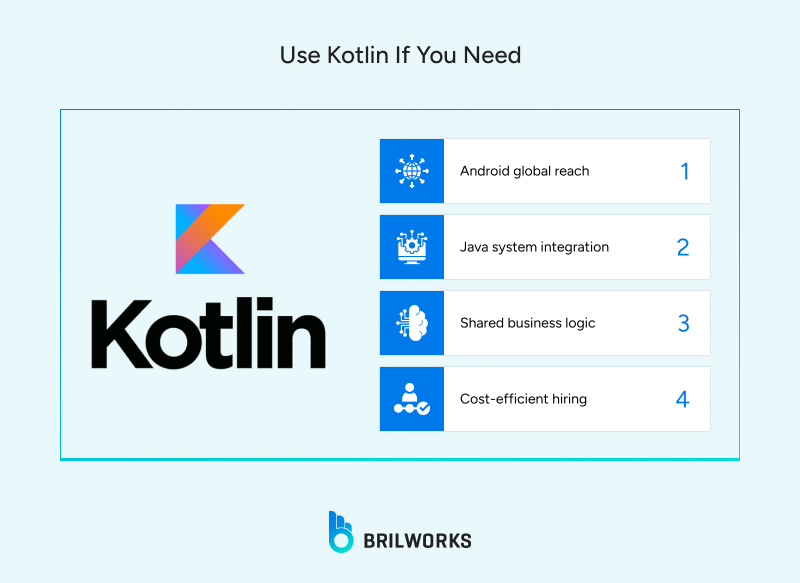
Crucially, projects that target both Android and iOS and want to share non-UI code to reduce maintenance efforts often choose Kotlin Multiplatform Mobile (KMM).
Understanding the current market standing of Swift and Kotlin requires looking beyond mere popularity to contextual use and professional adoption.
Developer surveys consistently rank both languages highly in terms of satisfaction and usage within their respective domains. In the annual JetBrains State of the Developer Ecosystem report, both languages show robust numbers.
Kotlin is used by over 60% of professional Android developers.

Source: Google for Developers
Swift holds an equally strong position as the single most important language for the massive Apple development community, and frequently ranks among the top most-loved languages in general developer surveys.
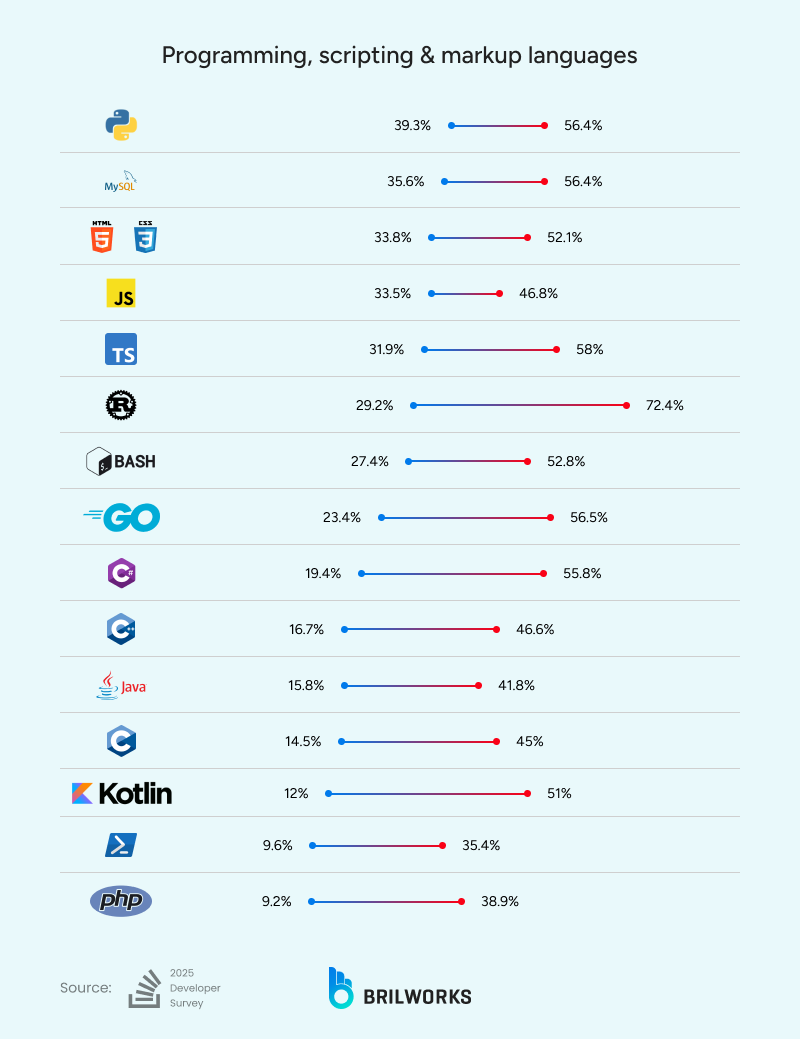
General popularity indexes like the TIOBE Index and the PYPL Popularity of Programming Language Index usually show both languages hovering consistently around the top 20.
While direct usage comparisons are difficult due to the differing sizes of the Android and iOS user bases.
The history of adoption showcases a clear and successful trajectory for both. Swift, released in 2014, saw rapid and almost mandatory adoption within the Apple community. Apple pushed its use heavily, and its technical superiority over Objective-C made it a fast, non-controversial replacement.
Within a few years of its open-sourcing in 2015, it quickly saturated its target market and became the default for all new iOS projects.
Kotlin, initially released in 2011, had a slower initial ascent. However, the turning point came in 2017 when Google officially endorsed it for Android. Following this endorsement, its trajectory became exponential.
It swiftly took over from Java as the language of choice for new Android development, and now its momentum is further carried by the growing interest in Kotlin Multiplatform for shared mobile code, providing a strategic advantage in cross-platform initiatives.
The key takeaway is that while Swift commands its dedicated, premium ecosystem, Kotlin’s adoption continues to grow steadily, due to its central role in the global Android market and the strategic appeal of KMP.
The availability of developers is a critical factor for any business looking to staff a new project or scale an existing one.
The pool of Swift developers is substantial, though typically specialized and deeply rooted in the Apple ecosystem. They are often concentrated in regions with higher Apple market penetration, such such as North America and Western Europe.
Swift developers possess expertise not just in the language syntax but in the intricacies of Apple's proprietary frameworks like UIKit, Core Data, and the new declarative SwiftUI. This high degree of specialization can sometimes lead to concentrated competition for senior talent.
The strong type safety and high standards enforced by the Apple environment generally result in a talent pool known for producing robust, high-quality code.
Conversely, the Kotlin talent pool is immense, benefiting significantly from its deep connection to the massive, long-established Java community.
A large portion of Java developers, especially in the Android sphere, have either transitioned to or become proficient in Kotlin.
This gives the talent pool a broader geographical distribution, extending well into high-growth developer markets like India and Eastern Europe.
Finding developers who can quickly become proficient in Kotlin is often easier, especially if they have prior Java experience, thanks to the languages' interoperability and syntactic similarities. Furthermore, the demand for developers skilled in Kotlin Multiplatform is a rapidly emerging sector, and teams with this combined skill set are highly sought after for projects that aim to target both iOS and Android with maximum efficiency.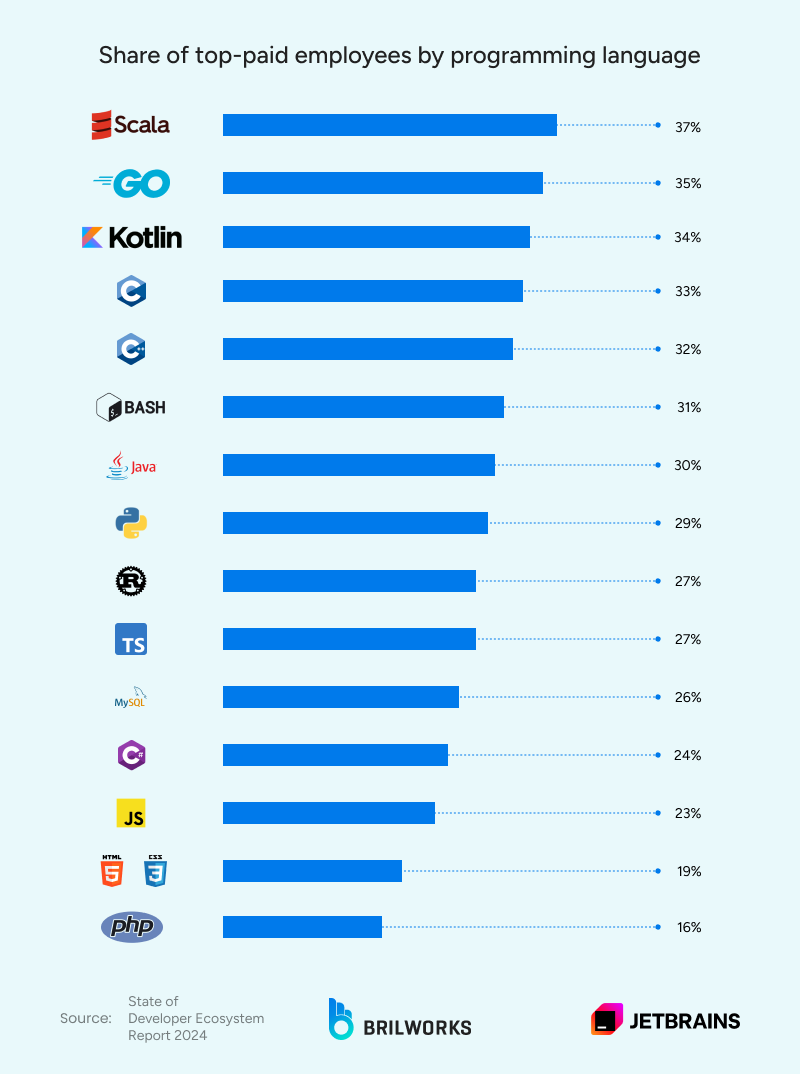
Both languages were developed specifically to solve the long-standing problems of their predecessors, Objective-C and Java.
Preventing the highly common and critical Null Pointer Exception (NPE) was a primary design goal for both languages. Swift handles this through optionals. A variable must be explicitly declared as either holding a value or holding nil.
The compiler then forces the developer to "unwrap" the optional (check for the presence of a value) before using it, making nil-handling explicit and preventing unexpected crashes. Similarly, Kotlin’s type system strictly distinguishes between references that can hold null and those that cannot.
Variables are non-nullable by default, and if a value is allowed to be null, it must be explicitly marked. The compiler then enforces checks for safe calls, practically eliminating runtime NPEs. Both approaches are modern, robust, and significantly enhance code stability.
A central objective for both languages was to dramatically reduce the verbose boilerplate code that characterized Java and Objective-C. Kotlin is highly celebrated for its concise syntax. Features like data classes, extension functions, and smart casts allow developers to express complex logic in fewer lines of code.
For instance, a simple data object that required numerous lines in Java can be defined in a single line in Kotlin. This significantly improves readability and reduces maintenance overhead. Swift is equally renowned for its clean, readable, and modern syntax.
Its design promotes Protocol-Oriented Programming (POP), offering flexibility and code structure that many developers find intuitive and powerful.
Features like type inference, closures, and generics make the code expressive while maintaining high performance. The consensus among developers is that both languages offer a superior and faster coding experience compared to their predecessors.

Both are state-of-the-art languages backed by technology giants. If your product strategy is Apple-first, Swift is the mandatory choice. Conversely, if your primary target is the Android market, or if you are aiming for the code-sharing strategy via Kotlin Multiplatform Mobile, then Kotlin provides the optimal pathway, significantly reducing overall development costs.
The rise of multi-platform frameworks, most notably Kotlin Multiplatform, is blurring the lines of responsibility. While Swift remains the indispensable, uncompromising native choice for the Apple platform, Kotlin is positioning itself as the more versatile language, extending its reach far beyond its Android origins.
Get In Touch
Contact us for your software development requirements
Get In Touch
Contact us for your software development requirements

Hello, we are BRILLIAN’S. Trying to make an effort to put the right people for you to get the best results. Just insight !

 503, Fortune Business Hub, Science City Road, Sola, Ahmedabad, Gujarat, India Pincode- 380060
 + 91 9313644148
 sales@brilworks.com


