Last updated May 7, 2026
Hiring a Flutter Developer: Rates, Vetting, and Models in 2026

4 mins read
Summarize with AI:


Data
AI
The Stack Underneath
Flutter has become a go-to framework for building cross-platform apps from a single codebase, and for good reason. But when you're ready to hire a Flutter developer, the real challenge begins: figuring out where to look, how much to budget, and which engagement model actually fits your project.
Get it wrong, and you're stuck with missed deadlines, ballooning costs, or a developer who can't ship production-ready code. Get it right, and you move fast with a partner who understands both the framework and your business goals. At Brilworks, we've helped startups and enterprises build and launch mobile apps using Flutter and other cross-platform technologies, so we know what separates a strong hire from a costly mistake.
This guide breaks down current Flutter developer rates, proven vetting techniques, and the hiring models available to you, whether you're looking for a freelancer, an agency, or a dedicated developer on your team.
Before you post a job listing or reach out to an agency, you need to answer a few key questions about your project. Skipping this step is the fastest way to waste time on interviews and budget on the wrong hire. Your project scope, required skill set, and cost ceiling will shape every decision you make from this point forward, including which hiring model makes sense.
A vague brief attracts the wrong candidates and leads to scope creep once the work begins. Write down the core features your app needs, the platforms you're targeting (iOS, Android, or both), and whether you need backend or third-party service integration. For example, a healthcare app requiring secure login, patient records, and push notifications is a very different scope from a simple e-commerce app with a product catalog and checkout flow. The more specific your brief, the easier it becomes to evaluate whether a candidate can actually deliver.
A one-page project brief covering features, platforms, integrations, and your target launch date gives any developer the context they need to give you an accurate estimate.
Your budget directly determines your hiring model, and your timeline determines how fast someone needs to ramp up. A hard deadline of six weeks rules out slow onboarding processes. If you're working with a fixed budget, a dedicated developer through an agency typically gives you more predictable costs than an open-ended freelance arrangement. Write these numbers down before you start any conversations.
Not every Flutter developer has the same depth. Some focus on UI-heavy builds; others specialize in state management and performance optimization. Before you hire a Flutter developer, list the technical requirements your project actually demands, such as Dart proficiency, Firebase integration, REST API consumption, or experience with packages like Riverpod or GetX.
Once you nail down your scope and budget, you can match those requirements to the right engagement model. The wrong choice costs you time and money, so understanding the tradeoffs upfront is worth a few minutes before you start any outreach.
Each model gives you a different balance of cost, flexibility, and control. Here is a quick breakdown:
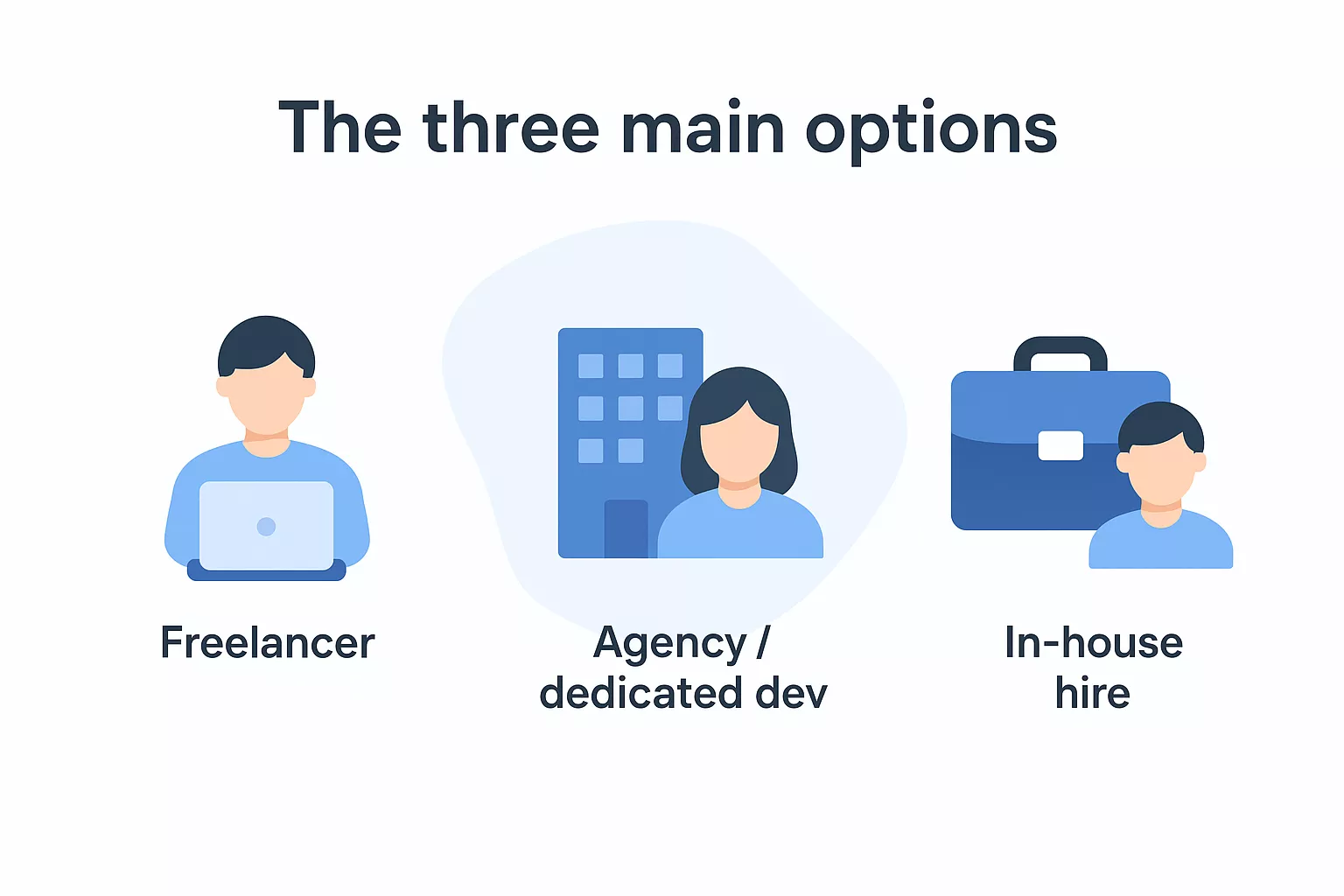
| Model | Best for | Who manages vetting | Typical commitment |
|---|---|---|---|
| Freelancer | Short, defined tasks | You | Days to weeks |
| Agency / dedicated dev | Full-time project work | The agency | 1+ months |
| In-house hire | Long-term ongoing builds | Your HR team | 12+ months |
If you need to hire a Flutter developer for a contained, well-scoped task, like a single feature or a working prototype, a freelancer gives you speed and flexibility. For anything requiring sustained focus over multiple weeks, a dedicated developer through an agency reduces your risk because the agency handles sourcing, screening, and replacements.
If your roadmap runs longer than three months, a dedicated engagement almost always costs less than cycling through freelancers repeatedly.
In-house hiring only makes sense if Flutter development is a long-term, ongoing need for your business. The total cost including salary, benefits, and onboarding is the highest of the three options, so reserve this path for established product teams with a multi-year roadmap.
Rate expectations vary widely depending on where the developer is based, their experience level, and the hiring model you choose. Before you hire a Flutter developer, build a full cost picture so you are not surprised mid-project by extra fees or slow ramp-up time.
Flutter developer rates break down roughly like this:
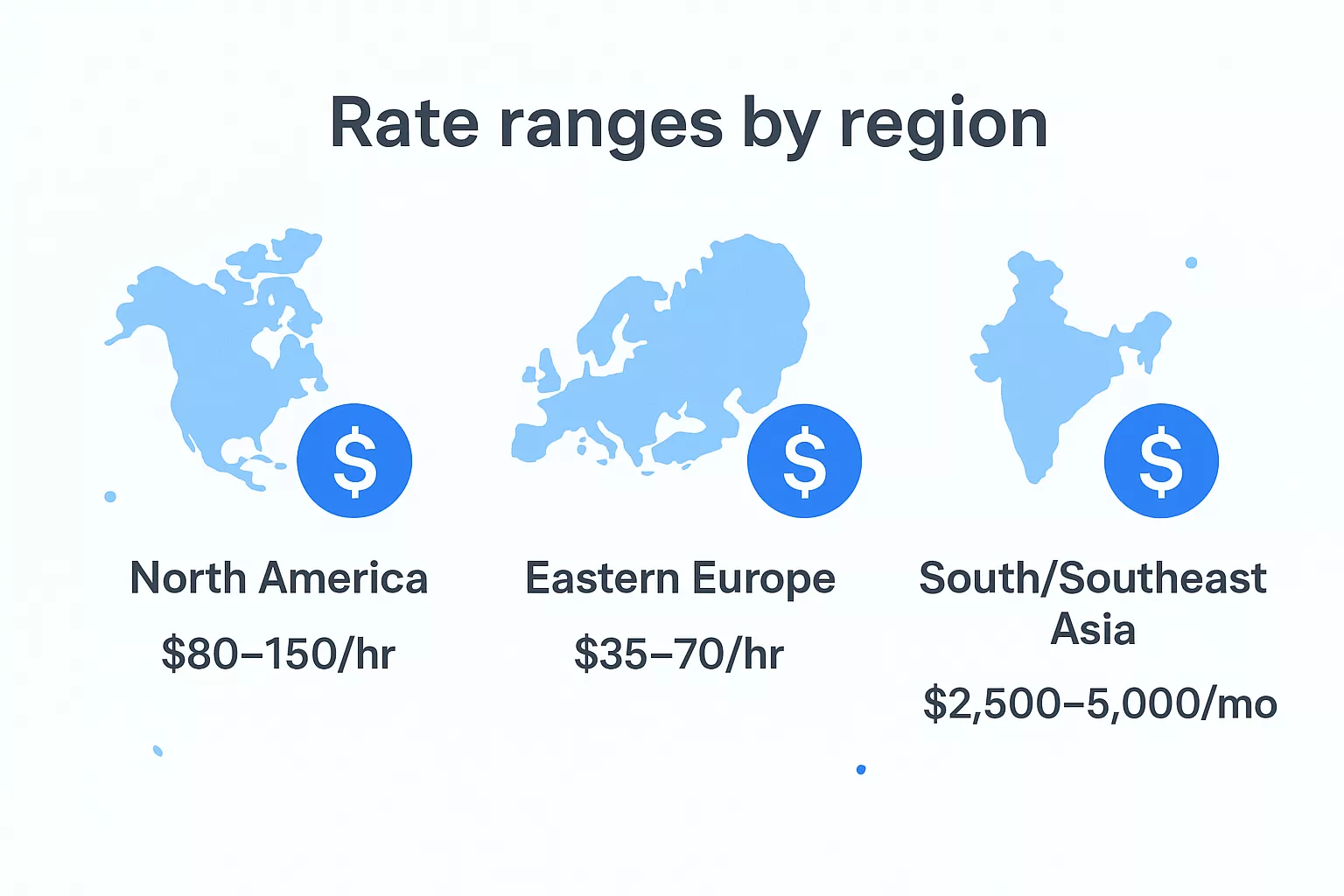
| Region | Hourly rate (freelance) | Dedicated monthly (agency) |
|---|---|---|
| North America | $80-$150/hr | $8,000-$15,000/mo |
| Eastern Europe | $35-$70/hr | $4,000-$7,000/mo |
| South/Southeast Asia | $20-$45/hr | $2,500-$5,000/mo |
Senior developers with production app experience sit at the top of each range. Mid-level developers with two or three shipped apps typically fall in the middle.
The cheapest hourly rate rarely produces the lowest total cost once you factor in revisions, miscommunication, and rework.
Code review time, onboarding, and tool licenses all add to your real spend. A developer charging $30/hr who needs three extra weeks of back-and-forth often costs more than a senior developer at $60/hr who ships clean, documented code from day one. Add at least 15 to 20 percent above your quoted rate to cover project management overhead and QA cycles.
A structured vetting process saves you from making a gut-feel hire that falls apart in week two. Before you hire a Flutter developer, set up a repeatable three-step screen so every candidate goes through the same evaluation.
Send a timed coding task that mirrors real work, not a brain teaser. A practical example is asking the candidate to build a simple stateful widget that fetches a list from a public REST API and displays it with a loading indicator. Keep the task under two hours. You learn more from their code structure, error handling, and Dart conventions than from any interview question alone.
A candidate who writes clean, readable code on a small task will almost always produce better output on a complex feature than one who only sounds confident in conversation.
Once the technical task passes review, move to a focused interview. Cover these four areas:
Even after a strong vetting process, no interview fully predicts how a developer performs on your actual codebase. A short paid trial sprint removes that uncertainty before you commit to a longer engagement. This step applies whether you hire a Flutter developer through an agency or as a freelancer.
Give the developer a real, bounded task from your actual backlog, something that takes three to five days and produces a working output you can review. A screen implementation, a bug fix on a live feature, or a small module build all work well. Evaluate their code quality, communication cadence, and ability to ask the right questions without hand-holding.
A paid trial sprint costs far less than unwinding a three-month engagement with the wrong developer.
Fast onboarding reduces the ramp-up tax on your team. Before the trial begins, prepare the following:
Clear documentation and structured check-ins cut wasted time in half and give you reliable signal on whether this developer fits your team long-term.
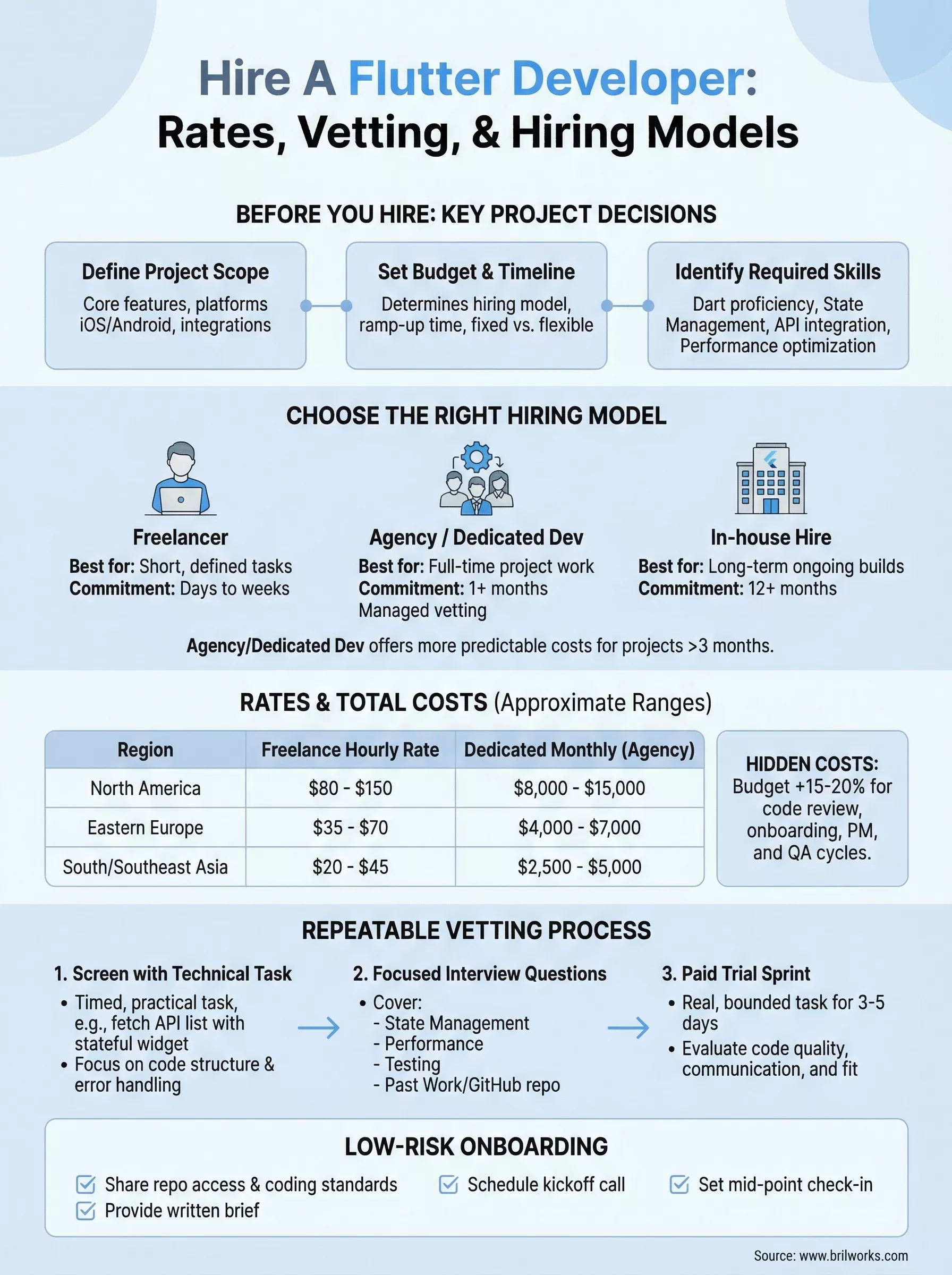
You now have everything you need to hire a Flutter developer without guessing your way through it. Define your scope, pick the hiring model that fits your timeline and budget, screen with a real technical task, and start with a paid trial sprint before committing to a full engagement. Each step in this guide builds on the last, so skipping any of them increases your risk of a bad hire or a stalled project.
If you want to skip the sourcing and vetting work entirely, working with a dedicated development partner gives you vetted Flutter engineers ready to ship from day one. You get predictable costs, built-in quality control, and a team that scales with your roadmap. Brilworks has helped startups and product teams build and launch cross-platform apps using Flutter across industries including Fintech, Healthcare, and E-commerce. Talk to our Flutter development team and get your project moving this week.
When you hire a Flutter developer, you can build cross-platform apps for both iOS and Android using a single codebase. This reduces development time, lowers costs, and ensures consistent performance across devices.
The cost to hire a Flutter developer depends on experience, location, and hiring model. Freelancers may charge hourly, while agencies or dedicated developers may offer monthly rates. Typically, costs range from budget-friendly offshore options to premium onshore talent.
When you hire a Flutter developer, look for strong knowledge of Dart, experience with Flutter frameworks, UI/UX understanding, API integration skills, and familiarity with state management techniques. Real project experience is a big plus.
If you hire a freelance Flutter developer, it can be more cost-effective for small projects. However, agencies provide a full team, structured workflows, and better scalability, making them suitable for larger or long-term projects.
The time to hire a Flutter developer can range from a few days to a few weeks, depending on your requirements and hiring model. Working with a reliable development partner can significantly speed up the process.
You might also like

Hello, we are BRILLIAN’S. Trying to make an effort to put the right people for you to get the best results. Just insight !